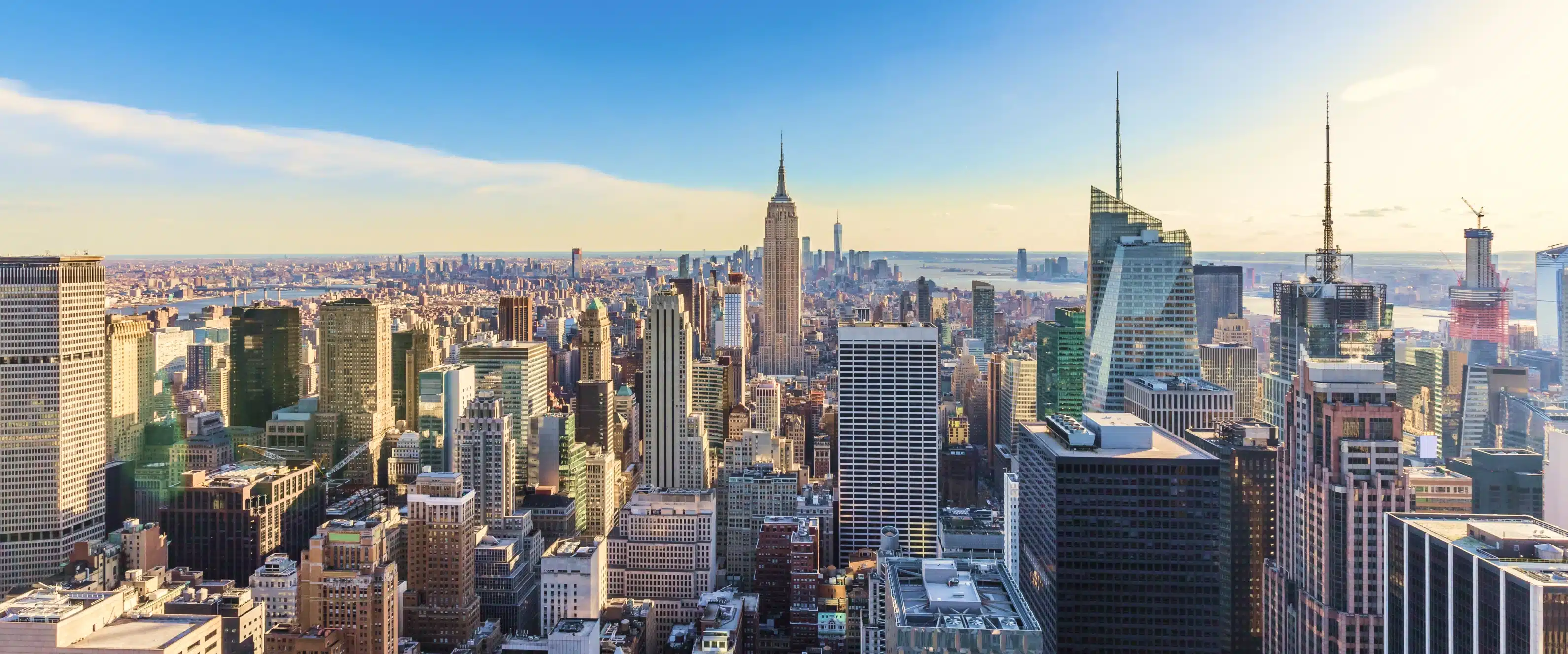
New York has a reputation for being brutally expensive, and the reputation is half deserved. What almost nobody tells you is that some of the best things in the city cost nothing at all. The Brooklyn Bridge, Central Park, the High Line, the ferry that sails past the Statue of Liberty and the 9/11 Memorial are all completely free, every day, for everyone. This guide lists 30 free things to do in New York, with hours, addresses and the traps to avoid, starting with the museum myth that half the internet still repeats.
Free New York in brief
- Always free for everyone: Brooklyn Bridge, Central Park, the High Line, the Staten Island Ferry, the outdoor 9/11 Memorial, Grand Central, the New York Public Library.
- Genuinely free museums: the Whitney on Friday evenings and the second Sunday of the month, MoMA PS1 every day, the National Museum of the American Indian always.
- The trap: MoMA, the Met and the American Museum of Natural History are free or pay-what-you-wish for New York State residents only. Visitors pay full price.
- In summer: free movies in Bryant Park every Monday, Summer Streets with the roads closed to cars, concerts in the parks, the beach at Coney Island.
- Real budget: $0 a day fills three full days. The money is for two or three chosen tickets, not for all of them.
Here is how it breaks down: the free landmarks that are worth the trip on their own, the truth about the museums (which is not what you read elsewhere), ten places most visitors never find, the summer events with dates and times, the day-by-day free admission calendar and a map of all of it. Every fact here was checked against official sources in July 2026.
Table of contents
- Free Things to Do in NYC That Are Worth the Trip
- Free Museums in New York: What Actually Applies to You
- The Neighborhoods Are Free, and They Are the Best Part
- Ten Free Spots Most Visitors Never Find
- The Free Observation Deck NYC Just Opened, and Other Free Views
- Free Walking Tours in NYC: What They Actually Cost
- Eating in New York Without Wrecking Your Budget
- Broadway Without Paying Full Price
- Free Summer Events in New York City
- The Free Admission Calendar, Day by Day
- What Is Free in the Other Seasons
- Free Indoor Things to Do When It Rains
- Where the Free Attractions Are
- When It Is Worth Paying
- Enjoy New York Without Spending
Free Things to Do in NYC That Are Worth the Trip
Here is the thing that changes how you plan a budget: in New York, the free experiences are not the discount version of the trip. They are the trip. Most of the moments you will still be thinking about a year later, the skyline lighting up from the bridge, the silence at Ground Zero, the ferry sliding past the Statue of Liberty, do not have a ticket attached to them.
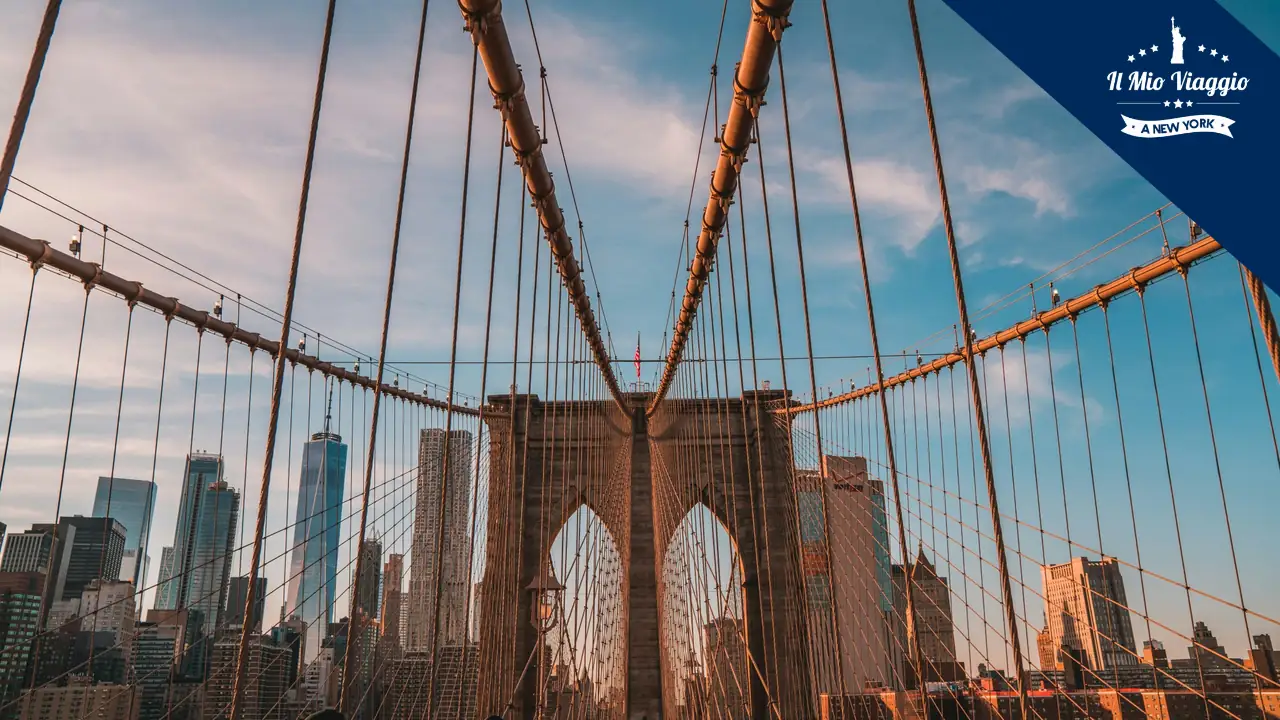
Walking the Brooklyn Bridge
The most famous symbol of the city is something you can walk across without paying a cent. The wooden pedestrian promenade runs above the traffic for roughly 1.1 miles, and the Manhattan skyline opens up behind you as you head toward Brooklyn. Go at sunset, when the towers shift from gold to blue and the lights come on one by one.
Practical advice: cross from Manhattan toward Brooklyn, so the city is in front of you instead of behind your back. When you get there, walk down into Brooklyn Bridge Park, where the lawn looks straight at Lower Manhattan and the bridge frames the best photo you will take all week.
Central Park, big enough to fill days
The whole park is free, and it is large enough to swallow more than one day. Inside there are places that count as attractions on their own: the Imagine mosaic at Strawberry Fields, the Bethesda Terrace with its fountain and arcade facing the lake, the Hans Christian Andersen statue and the bronze Alice in Wonderland group that children have been climbing on forever.
The right way to do it is not to march through. Buy something to eat, sit on the grass, watch a pickup baseball game on one of the fields scattered around, listen to the musicians under the Bethesda arcade where the acoustics do the rest. In summer the park hosts free concerts and screenings, and the lineup changes every year.
The High Line, a railway turned garden
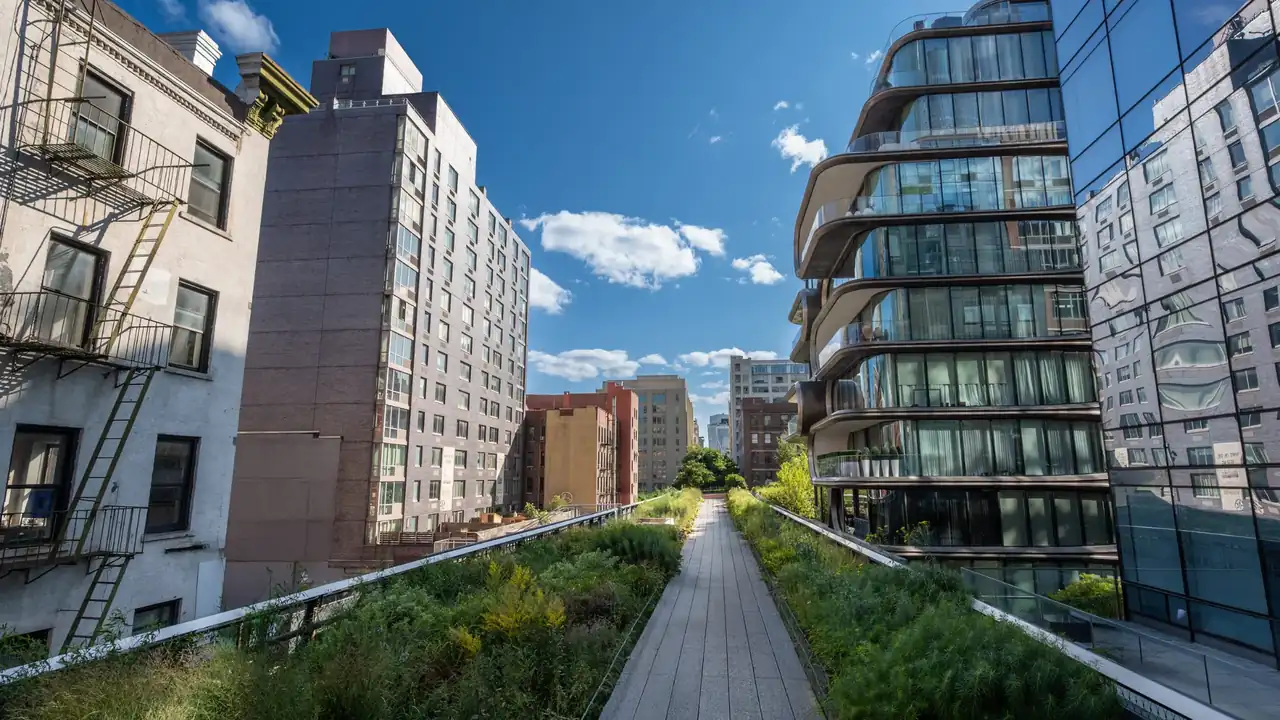
It was an abandoned elevated railway scheduled for demolition. Today it is a linear park floating above the West Side, with gardens, art installations, benches facing the Hudson and views into buildings at third-floor height. Entry is free and the full walk takes about an hour, less if you keep moving, much more if you stop the way you should.
The best stretch runs through Chelsea, where the park threads between the buildings. The southern end drops you near Chelsea Market, the northern end reaches Hudson Yards. Not far off the route, on North Moore Street, sits the Ghostbusters firehouse, Hook & Ladder 8, still an active fire station and free to look at from the sidewalk.
The Staten Island Ferry: the Statue of Liberty for $0
This is the best trick in the city, and it is not even a trick: it is public transport. The ferry connecting Lower Manhattan to Staten Island is free, 24 hours a day, every day of the year, and it passes within a few hundred yards of the Statue of Liberty. Setting foot on Liberty Island costs money, and if you want to do that the Statue of Liberty and Ellis Island tickets cover the crossing and the grounds. Seeing her from the water, with the skyline pulling away behind you, costs nothing.
The crossing takes about 25 minutes each way, so under an hour round trip. Stand on the right-hand side leaving Manhattan, which is the side the Statue is on. You have to disembark at Staten Island and re-enter the terminal to sail back, so you may as well take half an hour for the waterfront, where the view of Manhattan is better than anyone warns you.
Our advice
The Staten Island Ferry leaves from the Whitehall Terminal, a short walk from Battery Park. Catch it at sunset and you get two things at once: the Statue of Liberty in the best light of the day, and Manhattan lighting up as you sail back. It is free, so you can do it again on another day and it will still have cost you nothing.
The 9/11 Memorial
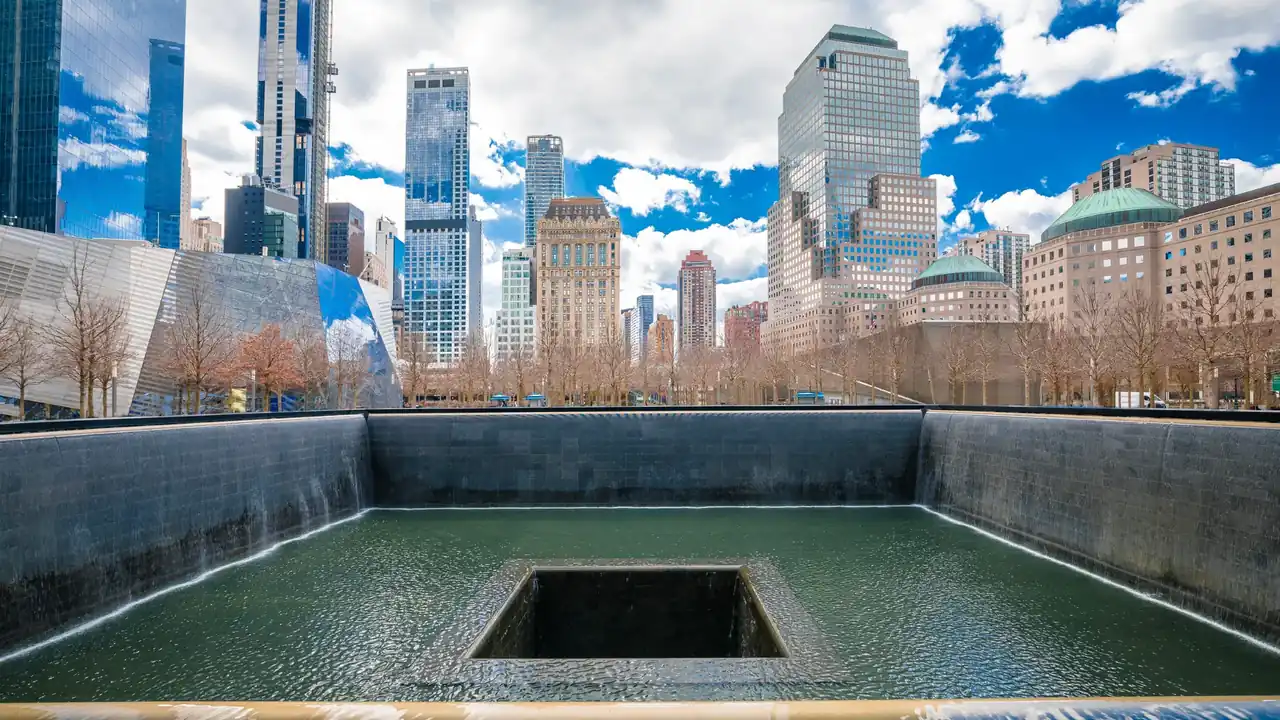
An important distinction here. The outdoor memorial is free for everyone, always. The underground museum is ticketed, and they are two different things. The two enormous square pools sunk exactly where the Twin Towers stood, with the water falling into the void and the names of the victims cut into the bronze parapet, are the memorial. You walk in freely, no ticket, no reservation.
It is the quietest place in New York, and you only understand that by standing there. Look for a white rose tucked into one of the engraved names: staff place one on that person’s birthday. If you want the museum as well, 9/11 Memorial Museum tickets are worth booking ahead, but the memorial alone justifies the visit.
Grand Central Terminal
It is a train station, so walking in costs nothing, and it is one of the finest interiors in America. The green ceiling of the Main Concourse maps the night sky with more than 2,500 stars, some of them lit. Here is the detail almost nobody notices: the constellations are backwards, painted as they would look from outside the celestial sphere. There is also a small dark rectangle left uncleaned during the restoration, kept as a reminder of how black the tobacco smoke had made it.
The best free thing in the building is the Whispering Gallery, on the lower level outside the Oyster Bar. Stand in one corner of the arch, put someone in the diagonally opposite corner, and talk into the wall. Your voice travels across the vault and arrives perfectly clear on the other side.
The New York Public Library
The main branch on Fifth Avenue, facing Bryant Park, is a Beaux-Arts palace from 1911 and it is free to visit. Two marble lions, Patience and Fortitude, guard the entrance. They were named during the Great Depression, after the qualities New Yorkers needed to get through it.
Go up to the Rose Main Reading Room on the third floor: nearly 300 feet of reading room under a painted ceiling and bronze chandeliers, where people are actually studying and the silence is the real kind. On the ground floor there are free exhibitions that rotate through the year, drawing on a collection that includes a Gutenberg Bible and the handwritten notebooks of famous writers.
Free Museums in New York: What Actually Applies to You
This is where most guides get it wrong, and the mistake sends people to the ticket desk with the wrong expectation. The line that has been circulating for years is “MoMA is free on Fridays.” That is not true for you.
The pay-what-you-wish trap
Three of the city’s biggest museums offer free or pay-what-you-wish admission only to New York State residents, and they often ask for proof:
- MoMA: free on Fridays from 5:30pm to 8:30pm, but the free tickets are reserved for New York State residents, with a reservation and proof of residency. As a visitor you pay the full $30. Under-16s are always free, wherever they live.
- The Metropolitan Museum: pay-what-you-wish for New York State residents and for students from New York, New Jersey and Connecticut. Everyone else pays full price.
- American Museum of Natural History: pay-what-you-wish for New York State residents with valid ID. As a tourist, full fare.
If you read anywhere that these three are free for everybody, you are reading something years out of date. The good news is that genuinely free museums do exist.
The Whitney Museum: free for anyone on Friday evenings
This is the single best case in the city and it is worth building an evening around. The Whitney Museum of American Art, at the southern end of the High Line, is free on Friday evenings and on the second Sunday of every month, for anyone, resident or visitor. It is also always free if you are 25 or under, any open day.
Inside is the finest collection of twentieth-century American art anywhere, from Hopper to Rothko, and the outdoor terraces look down over the Hudson and the High Line. Perfect combination: walk the High Line in the afternoon, hit the Whitney for free at drinks hour.
MoMA PS1 and the always-free museums
Worth writing down: MoMA PS1, MoMA’s contemporary art outpost in Queens, became free for everyone in 2026. It sits in Long Island City, one subway stop from Manhattan, inside a converted public school, and it shows the most experimental work in the city.
These are free for everyone, always, no conditions:
- National Museum of the American Indian, at Bowling Green, inside the old Custom House: part of the Smithsonian, and the building alone is worth the walk.
- American Folk Art Museum, near Lincoln Center.
- Bronx Museum of the Arts.
- Federal Hall, on Wall Street, where George Washington was sworn in as the first president of the United States.
Guggenheim and Brooklyn Museum by donation
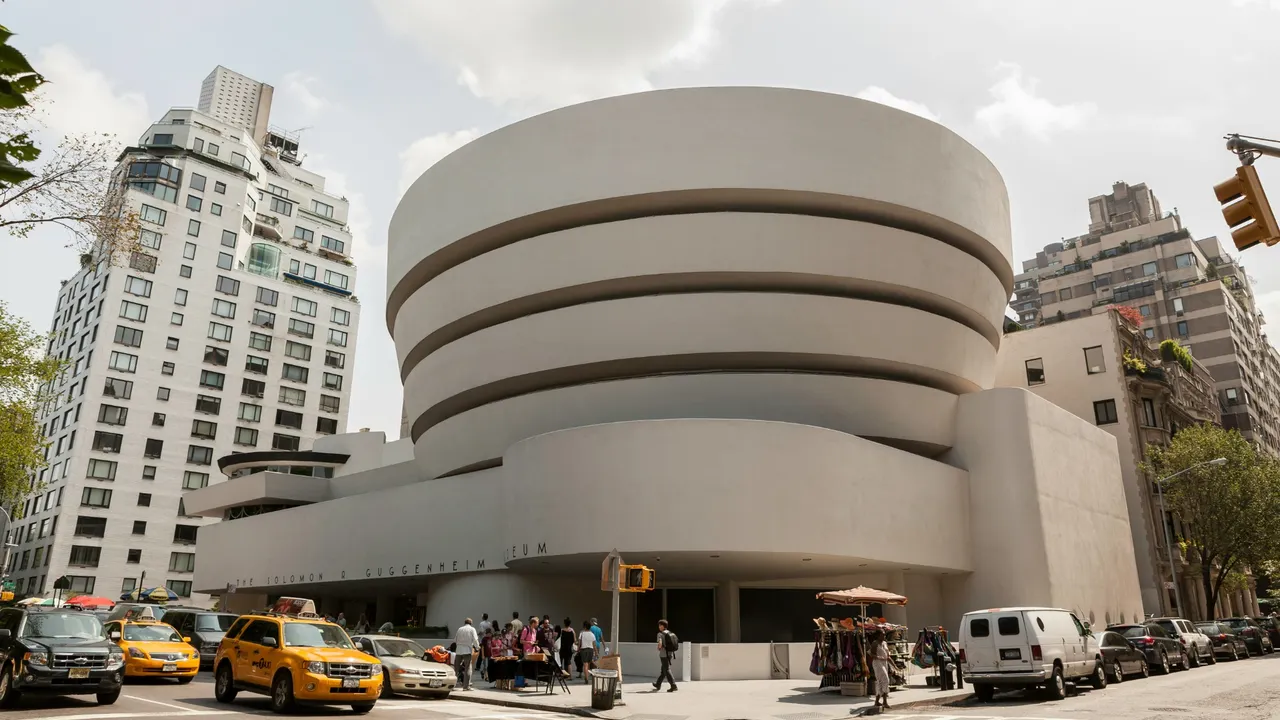
The Guggenheim runs pay-what-you-wish in specific time slots, with a suggested contribution around $10 and a $1 minimum. Tickets are limited, released online and gone quickly, so you need to grab them the moment they drop. The Brooklyn Museum does pay-what-you-can on the first Saturday of the month in the evening, with concerts and workshops, and it is one of the best and least touristy nights out in the city.
These policies change often and vary museum by museum, so always check the official site before you go. The full picture, with prices and what each admission covers, is on our New York museum tickets page. If you would rather see the Guggenheim properly without waiting for a slot, the Guggenheim Museum tickets page has the details.
And if the count says more than two museums, the question changes: it stops being about catching the right free window and starts being about paying less for the whole set. A cumulative pass holds the major admissions together at a locked price and leaves your afternoons free for everything that costs nothing. You book it with real support before, during and after the trip.
For the things you pay for
New York CityPASS
The Empire State Building, the American Museum of Natural History and the other icons in one pass at a locked price, leaving your days free for what costs nothing.
The Neighborhoods Are Free, and They Are the Best Part
Nobody charges you to walk. And in New York, walking through a neighborhood is the experience: the language changes, the food in the windows changes, the height of the buildings changes within two blocks.
Bushwick and open-air street art
If you want the city’s underground side without spending a dollar, go to Bushwick, in Brooklyn. The Bushwick Collective is a street art museum that happens to be a street: entire warehouse facades painted by international artists, the work changing season by season because people keep painting over it. The core is around Troutman Street, near the Jefferson Street stop on the L train.
Give it ninety minutes of slow walking with your phone out. The neighborhood is alive, full of coffee shops and people who work there, and it feels like a New York that has not finished changing yet.
Chelsea: art galleries, no admission
Few people know this and it may be the most underrated item on the list: the contemporary art galleries of Chelsea are free, all of them. They cluster between Tenth and Eleventh Avenue, roughly from 19th to 27th Street, dozens of spaces side by side. You walk in, you look, you leave. Nobody asks you for anything and nobody tries to sell you a thing.
The night to go is Thursday, when many galleries hold openings and sometimes hand out a glass of wine. It is the cheapest way to see art in New York and one of the most interesting, because what passes through here is what museums will be showing in ten years.
Around the corner is Chelsea Market, built inside the old Nabisco biscuit factory where the Oreo was invented. You are not obliged to eat: the brick corridor with its exposed pipes and neon signs is free to walk through and is one of the best sets in the city.
Chinatown, Little Italy and Williamsburg
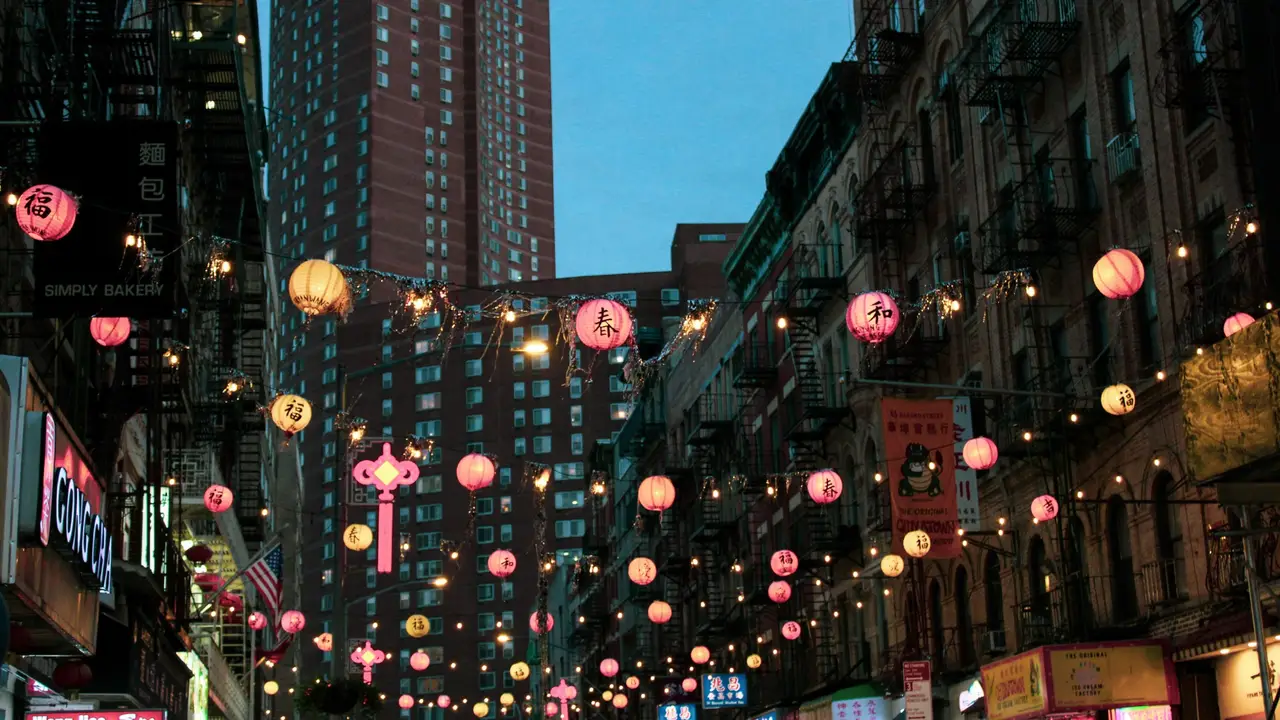
Chinatown is where New York stops looking like America: fish stalls on the sidewalk, herbal pharmacies, signs in Chinese, the noise. It costs nothing to cross it and come out in Little Italy, which has shrunk to a few streets around Mulberry Street but is still a piece of Italian emigration history.
Williamsburg, across the East River, is one subway stop away and walkable: vintage shops, murals, and above all the waterfront, where the view of Manhattan at night is among the best in Brooklyn.
Rockefeller Center is worth a stop even without going up: the plaza with its gilded Prometheus is open to walk through, and from outside you can see Radio City Music Hall with its neon marquee. In December the Christmas tree arrives here, and looking at it costs nothing. Skating on the rink underneath it does not.
Ten Free Spots Most Visitors Never Find
The classics are done. Now the interesting part: free places that never make the standard itinerary, which is exactly why you will find more locals than tourists in them.
Little Island, the park floating on the Hudson
Opened in 2021, it is a park built on 132 tulip-shaped concrete piles driven into the Hudson at 13th Street. You reach it by walkway, walk over artificial hills and past a small amphitheatre, and the river views come included. Admission is free, though in peak months and hours you need to book a time slot online, so check before showing up.
The Brooklyn Heights Promenade
If we had to name the best free view of Manhattan, this would be it. A third of a mile of terrace cantilevered over the expressway, inside the residential streets of Brooklyn Heights, with the Lower Manhattan skyline opening across the East River and the Brooklyn Bridge off to one side. At sunset it fills with locals walking dogs. Ten minutes uphill on foot from Brooklyn Bridge Park.
Washington Square Park
The heart of Greenwich Village, with its marble arch modelled on the Arc de Triomphe and a fountain that always has something happening around it: pianists who haul a grand piano into the middle of the park, chess hustlers playing for money, NYU students, dogs in the run. You pay nothing and you stay an hour. It is one of the places where New York looks at itself.
Roosevelt Island and Four Freedoms Park
The narrow island in the East River is reached by an aerial tram that flies over the water, and the remarkable part is that it costs the same as a subway ride: the standard OMNY fare, under $3, for an aerial view of Manhattan that anywhere else would be sold as an attraction. At the southern tip sits the free Franklin D. Roosevelt Four Freedoms Park, a wedge of granite and linden trees designed by Louis Kahn, pointed straight at the skyline.
Green-Wood Cemetery
It sounds like a strange idea and it is one of the best walks in Brooklyn. A monumental cemetery from 1838, covering 478 acres, with hills, ponds, old-growth trees and a Gothic Revival gate that is a monument in itself. Leonard Bernstein and Jean-Michel Basquiat are buried here. From the highest hill you can see the harbour. Entry on foot is free, and wild monk parakeets have been nesting in the gate’s spires since the 1970s.
The Ford Foundation atrium
Very few people know this one. Inside the Ford Foundation building on 42nd Street near the United Nations there is a twelve-storey indoor garden with real trees, a pond and silence, in the middle of Midtown. Free during opening hours. Outside is the traffic; inside feels like another planet.
Socrates Sculpture Park
In Queens, in Astoria, on the waterfront: it was an illegal dump, now it is a free outdoor sculpture park with large works that rotate every season and a view of Manhattan across the water. In summer there are screenings and concerts, also free.
The Union Square Greenmarket
On Mondays, Wednesdays, Fridays and Saturdays, Union Square fills with the farmers market coming down from upstate New York. Walking through is free, samples often are too, and you see what New Yorkers actually eat. It is also where you realise the city has countryside around it, which you would never guess from the skyscrapers.
Wall Street and the Charging Bull
The Charging Bull, three and a half tons of bronze, was dropped there overnight in 1989 by the artist Arturo Di Modica without asking anyone’s permission. The city removed it, then had to put it back after public protest. Seeing it and photographing it is free, as is walking down Wall Street, passing the Stock Exchange and reaching Trinity Church, which was the tallest building in New York for fifty years.
Times Square, after dark
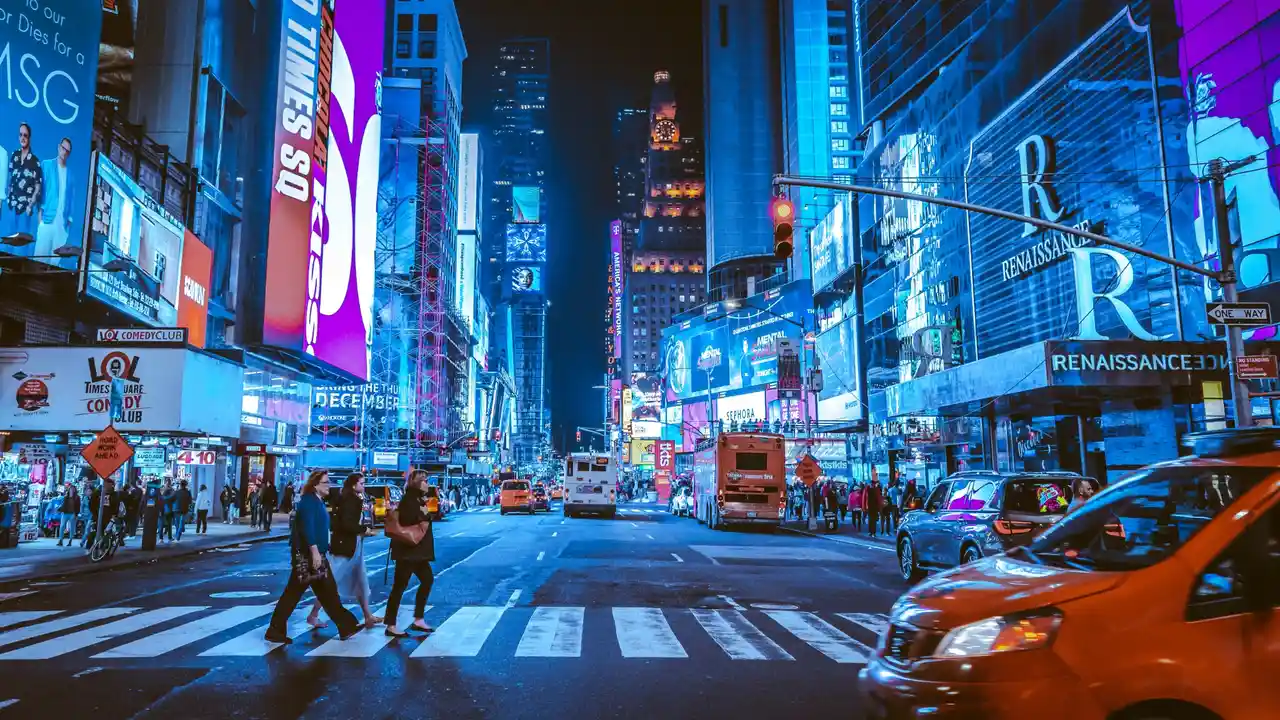
Yes, it is the definition of a tourist trap. But standing in the middle of Times Square after sunset, with the screens lighting your face like daylight, is an experience with no equivalent anywhere on earth, and it is completely free. Spend twenty minutes, take the photos, go somewhere else: nobody is forcing you to eat there, and that is exactly where the prices turn absurd.
The Free Observation Deck NYC Just Opened, and Other Free Views
Let’s be honest about this one, because it is where most guides tell a half-truth: every observation deck in New York is ticketed. Empire State Building, Top of the Rock, Edge, One World Observatory, SUMMIT One Vanderbilt. Tickets start around $44 a head and climb past $60 on peak days. None of the five has a free version, and anyone who tells you otherwise is walking you into a rooftop bar.
Then, in June 2026, something happened here that had not happened since 1914.
Centre 360, New York’s first free observation deck
On June 11, 2026 the city opened the cupola of the David N. Dinkins Municipal Building to the public: the Beaux-Arts giant at 1 Centre Street in Lower Manhattan, right across from City Hall. The experience is called Centre 360, and it is the first time since the building opened in 1914 that anyone who does not work inside can go up there. The cupola was meant to be public from the start. It stayed shut for a century instead.
You end up more than 500 feet above the street, on the 36th floor, walking a circular balcony directly beneath Civic Fame, the 25-foot gilded statue holding a crown with five points, one for each borough. The view is a true 360: the Empire State Building and the Midtown towers on one side, the harbor and the Statue of Liberty on the other, the East River bridges lined up in between like a technical drawing. It costs nothing.
The conditions are strict, and worth knowing before you plan around it:
- Online reservation required through the city portal on nyc.gov. Walk-ins are turned away, and that is not a theoretical risk: capacity is roughly two hundred people a week.
- Monday to Friday only, 9am to 5pm, eight sessions a day, one every hour. Closed weekends and federal holidays.
- A maximum of five people per reservation, and a maximum of five tickets per email address per week.
- At least one person in the group must be 18 or over and carry valid photo ID. There is a security screening: this is still a municipal building with two thousand employees inside. Under-18s must be accompanied and at least 42 inches tall.
- The whole thing takes about an hour, of which 15 to 20 minutes are spent in the cupola itself. You are on your feet throughout, so wear closed-toe shoes.
- Phones and cameras yes, tripods and drones no. The cupola is an open space: heavy wind or rain cancels the ascent.
You start at the NYC CityStore on the ground floor, entrance on Centre Street. By subway: Brooklyn Bridge on the 4, 5, 6, J, M, City Hall on the R, or Chambers Street on the 1, 2, 3, A, C. You are a five-minute walk from the Brooklyn Bridge, which makes it easy to fit both into the same morning.
Our advice
Centre 360 reservations open on the first day of each month and cover that month only. With two hundred slots a week in total, waiting until the week before means finding everything gone. If your trip is in September, put September 1 in your calendar and book that day. And since it is closed on weekends, if you only have a weekend in New York this is one of the few things you have to squeeze into a weekday.
The Pier 57 rooftop park, in Chelsea
If Centre 360 is booked out, or if you are in town on a weekend, the best alternative is the Pier 57 Rooftop Park: nearly two acres of lawn, benches and loungers on the roof of a converted pier, inside Hudson River Park at West 15th Street. It is free, needs no reservation, and it is open every day from 6am to 1am.
That closing time is the real secret. At eleven at night there is almost nobody up there, and in front of you sit Little Island lit up, the Lower Manhattan skyline with One World Trade Center, the Hudson running toward New Jersey and, far off, the Statue of Liberty. It is one of the few panoramic views in this city you can look at slowly, with nobody behind you waiting for your spot on the railing.
Come in through the south gate near City Winery: the park entrance is directly across from Little Island, so the two go together without moving the car. Then stairs or elevator to the roof. On the ground floor is Market 57, the food hall curated with the James Beard Foundation, around fifteen stalls. Buy something downstairs and carry it up. It is the cheapest dinner with a view in New York.
The public terraces nobody looks for
The Elevated Acre, at 55 Water Street, is an acre of park about forty feet above the street in the Financial District, wedged between two office towers. You reach it by outdoor escalators that look like they lead nowhere. Up top there is lawn, a tiered amphitheater and a wooden boardwalk facing the East River, with the Brooklyn and Manhattan bridges ahead and Governors Island to the right. Open daily, 7am to 10pm in summer, shorter in winter, and hours shift when there is an event. One thing nobody ever writes: there are no public restrooms.
The Stavros Niarchos Foundation Library terrace, at 455 Fifth Avenue on the corner of 40th, is on the seventh floor of the branch that sits across the street from the New York Public Library we covered earlier. Walk in, take the elevator, turn right, and you are on a roof garden open to anyone, no card and no ticket. We will temper this one: it is not an observation deck. You are around 150 feet up and a six-foot glass barrier separates you from the edge. It is the right place to sit for half an hour with a book and look at the Midtown towers, not to take the photo of your life. Seating is first-come, first-served, and the rooftop café has closed, so bring your own drink up.
Gantry Plaza State Park, in Long Island City, is twelve acres on the Queens waterfront directly opposite Midtown. From here you see the skyline whole, from the outside, which is something you cannot do while standing inside Manhattan. Take the 7 train to Vernon Blvd-Jackson Av, one stop from Grand Central. Every photo of the neon Pepsi-Cola sign with the towers behind it was taken here, and at sunset the light is on the right side.
Two clarifications that save disappointment. The Roosevelt Island Tramway, the cable car over the East River, gets sold as free constantly: it costs a subway fare and takes the same OMNY tap. And the Met rooftop is not free, because that museum’s pay-what-you-wish applies only to New York State residents. As for rooftop bars, walking in costs nothing, but nobody lets you stand there photographing for half an hour without ordering, and a drink up there starts at $20. For two people that is $40: at which point two tickets to an actual observation deck cost barely more, and the view is a different thing entirely.
Free Walking Tours in NYC: What They Actually Cost
Search for free tours in New York and sooner or later you land on free walking tours: two or three hours on foot with a guide, no ticket, leaving every morning from half of Manhattan. The most common meeting point is the Bryant Park fountain, the same lawn as the outdoor movies. They are real, and often genuinely good. It is just that the word “free” here means something other than what you think.
The model is pay what you wish: nobody asks for money at the start, the guide works, and at the end explains that they live on tips. At that point you are standing in a circle with twenty other people reaching for their wallets, and it is not a situation you walk away from empty-handed. The expected tip in New York, where the cost of living is what it is, runs $10 to $20 per person, and several US sources suggest the top of that range, because in a city like this ten dollars reads as below average. For two people on a two-hour tour, that is $20 to $40. More than a MoMA ticket.
That does not make them a scam. It makes them a different product from the one advertised. Go in knowing you are buying a tour at a price you set yourself and the math works. Go in expecting to spend nothing and you leave the sidewalk with a strange look on your face. Add that many once-free tours now charge a fixed fee: the model is shifting, and not everything indexed as a “free tour” still is one. Check the booking page, not the search result title.
One more thing, since we are being straight with you: ninety percent of what a guided walk is worth lives in what the guide says. If the group is thirty people on a windy corner of the Lower East Side and you are at the back, you have paid twenty dollars in tips for half the story. That is not the guide’s fault. It is the format.
So here is our position, stated plainly, and we are hardly neutral. You can walk the neighborhoods on your own for nothing, and the section above tells you how. If you want someone to tell you what you are looking at, the question is not free versus paid, it is how much of it actually reaches you. A walking tour of the High Line, Hudson Yards and Greenwich Village or a Brooklyn Heights and Hamilton Park walk has a price printed on it and a small group: you know what you are spending before you start, which is the part the free model never gives you.
Eating in New York Without Wrecking Your Budget
Past this point we cross from free into cheap, and the two are not the same list. Some of the best cheap things to do in NYC involve handing over four dollars and getting something nobody visiting from abroad forgets. Food is the line item that blows up a budget faster than attractions do, and at the same time it is where you save best without giving anything up. Cheap food in New York is not bad food: it is what everyone eats.
- A bagel with cream cheese runs about $5 and holds you until the afternoon. It is the city’s real breakfast, not a tourist version of one.
- A slice of pizza: $2 or $3 in the right places, which are the ones without photographs of the food in the window.
- Food trucks and halal carts: a plate of rice, chicken and salad for around $10, large enough to feed two people.
- Chinatown: a bowl of noodle soup or a plate of dumplings at prices that do not exist in Midtown. It is also the neighborhood with the best quality-to-price ratio in the city.
- Smorgasburg, on weekends, is the largest open-air food market in America. Getting in costs nothing, walking the stalls is a sightseeing activity in itself, and then you decide whether to buy.
Two golden rules. First: walk two blocks away from any attraction and the bill drops by 40 percent for the same quality. Second: watch for happy hour, which in New York is a serious institution, with drinks and snacks at half price in fixed late-afternoon windows.
Broadway Without Paying Full Price
A Broadway show is never free, but the gap between the full price and what you pay if you know the system is enormous. There are three routes and all three are worth knowing.
- The TKTS booth in Times Square, under the red steps, sells same-day unsold tickets at discounts reaching 50 percent. There is a queue, and it works best for matinees and weekday shows.
- Digital lotteries: most shows release a small number of seats every day at token prices, often around $10 to $30. You enter from the app or the website the day before, and if your name comes out you sit in the front row for almost nothing. Entering is free, so enter every lottery for every show you care about, every day of your trip.
- Rush tickets and standing room: discounted seats sold at the box office when it opens, or standing places at the back of the house for very little when a show is sold out.
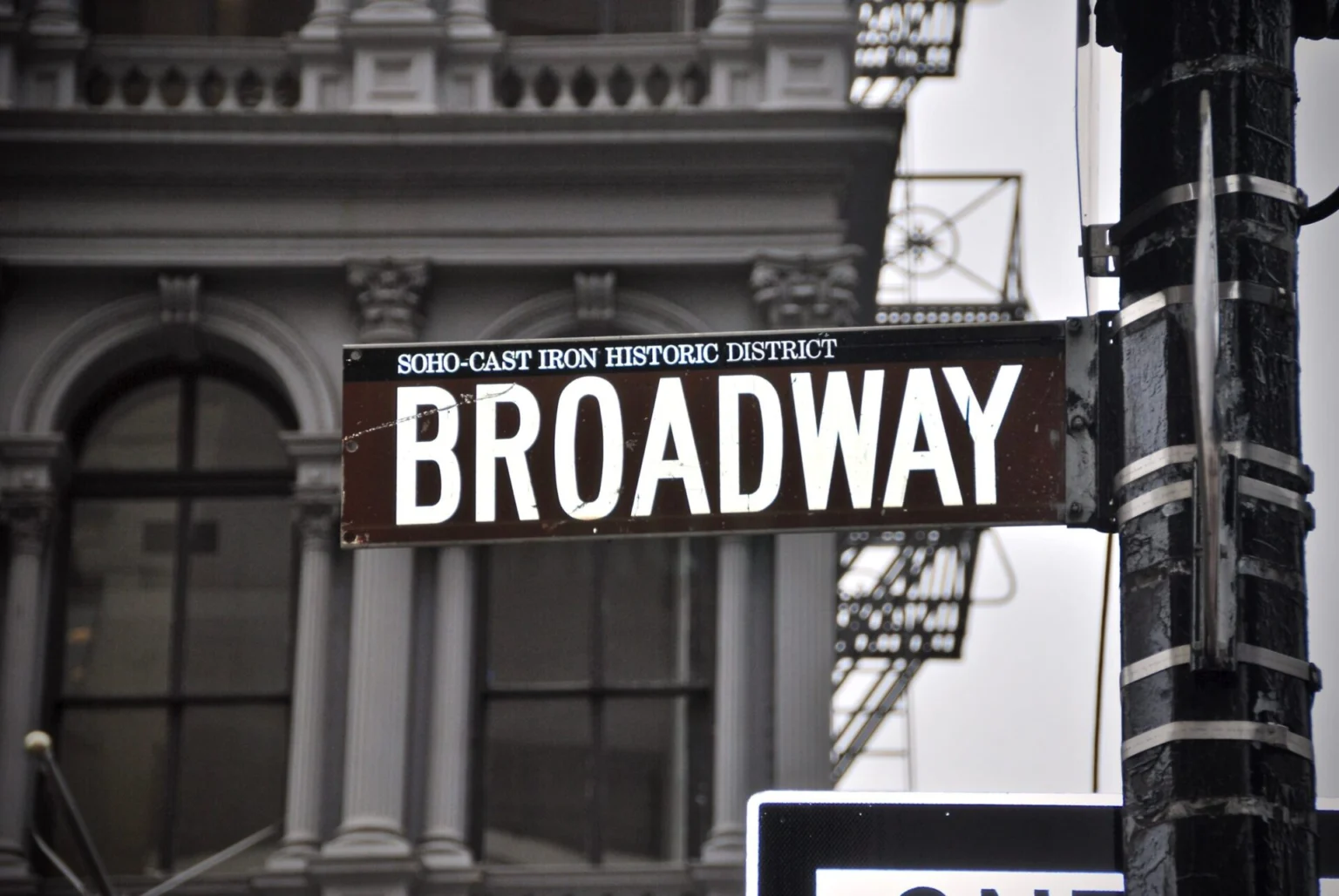
If you want a guaranteed seat at the show you actually came for, rather than gambling on a lottery, the titles and dates are on our Broadway show tickets page.
For everything the city does after dark, paid and free, we have a separate guide on what to do at night in New York. Away from Broadway, the city gives away music constantly. SummerStage brings free concerts to parks across all five boroughs all summer, with names you would pay heavily for elsewhere. The Naumburg Orchestral Concerts in Central Park are free open-air classical music and have been running since 1905. And in the comedy clubs of the Village you can catch famous comics testing new material on open nights for very little: there is a drink minimum at the bar, but often no cover.
Free Summer Events in New York City
In summer the city moves everything it can outdoors and makes it free. This is the season when the ratio between what you spend and what you see is unbeatable, provided you know what is on and where.
Movie nights under the stars in Bryant Park
Manhattan’s best-loved summer tradition, and in 2026 it reaches its 33rd season. Every Monday from July 13 to September 14 the Bryant Park lawn becomes an open-air cinema: the lawn opens at 5pm, the film starts at 8pm, admission is completely free and there are no tickets and no reservations.
The park sits between Fifth and Sixth Avenue at 42nd Street, right behind the New York Public Library. Rules worth knowing: blankets only. Chairs, tables and plastic ground coverings are not allowed on the lawn. Locals arrive around five with a picnic and claim their spot, because by seven there is nothing left. Every screening is captioned, which helps if English is not your first language.
The 2026 lineup leans on classics: it opens with Wayne’s World and runs through Good Morning, Vietnam, The Truman Show, Bridget Jones’s Diary, Catch Me If You Can, City of God, No Country for Old Men, Galaxy Quest and Shakespeare in Love. On the Fountain Terrace, from 4pm to 8:30pm, the Hester Street Fair brings food stalls if you would rather not pack a basket.
Our advice
Bryant Park lets you onto the lawn with a blanket and nothing else: chairs, tables and plastic sheets get stopped at the entrance, and it is the mistake we see visitors make most often. Keep a light one in your bag from the morning, get there when the lawn opens at 5pm and spread it straight away. By 7pm every decent spot in front of the screen is gone.
Summer Streets: the city without cars
For a few Saturdays each summer New York closes its streets to traffic and hands them back to people. In 2026 Summer Streets runs on Saturdays from July 25 to August 22 and covers all five boroughs, for a total of more than 20 miles of car-free road. Hours differ depending on where you are: Manhattan runs 7am to 3pm, while Brooklyn, Queens, the Bronx and Staten Island run 9am to 5pm.
Along the route there are art installations, outdoor fitness classes, live music and stalls. Last year more than 500,000 people took part. In the Bronx the route follows the Grand Concourse, from East Tremont Avenue to Mosholu Parkway; in Queens it runs along Vernon Boulevard, on the waterfront between Long Island City and Astoria. Walking down the middle of Park Avenue with no cars around is not something you can buy.
The beach at Coney Island
Yes, New York has beaches, and you get there on the subway. Coney Island, in Brooklyn, has a long sand beach in front of Luna Park with the wooden boardwalk running alongside it. Swimming is free, the boardwalk is free, looking up at the Cyclone rollercoaster is free: you only pay if you ride it.
Two warnings from people who have been. The water is considerably colder than visitors expect, even in August. And shark sightings do occasionally get called in from helicopters, with the water cleared while it is checked: it happens, it is part of the day, and you get out and wait.
The August festivals
August is when the city is hottest, most crowded and most generous with free events. The recurring ones to watch for are Harlem Week, with concerts and street fairs celebrating African American culture, the Charlie Parker Jazz Festival, free and outdoors, the Hong Kong Dragon Boat Festival in Queens with its dragon boat races, and Summer Restaurant Week, which is not free but drops good restaurants to human prices.
There is also the US Open: the tournament itself is ticketed, but the qualifying week that precedes it is free to watch, and it is real tennis with the courts a few feet away. Dates shift every year, so check before you travel.
The Free Admission Calendar, Day by Day
Many institutions have a fixed free window during the week. Knowing which day falls where lets you build the itinerary around the free hours instead of discovering them the day after you fly home.
| Day | Where | Real conditions |
|---|---|---|
| Monday | Movies in Bryant Park (July 13 to September 14) | Free for everyone, lawn opens at 5pm, film at 8pm |
| Wednesday | Bronx Zoo | Free on a limited-admission basis, advance online reservation required. Does not include Total Experience attractions |
| Wednesday | New York Botanical Garden | Grounds free all day for NYC residents, for everyone else only 10am to 11am |
| Wednesday | New York Aquarium | Pay-what-you-wish from 3pm to last entry |
| Thursday | Chelsea galleries | Always free, openings in the evening |
| Friday | Whitney Museum | Free in the evening for anyone, no residency requirement |
| Friday | MoMA | Free 5:30pm to 8:30pm for New York State residents only, with reservation and ID |
| First Saturday of the month | Brooklyn Museum | Pay-what-you-can in the evening, with events and live music |
| Second Sunday of the month | Whitney Museum | Free for anyone |
Conditions verified in July 2026 on the institutions’ official websites. Free windows change: check the official page before you go.
Watch out for one detail that ruins days: the free slots with limited capacity, like the Bronx Zoo, require an online reservation and the tickets vanish within hours of release. Do not turn up at the gate assuming that being there on a Wednesday is enough. And remember that policies change: always confirm on the institution’s official site before you plan the day around it.
What Is Free in the Other Seasons
Summer is the most generous season, but the others do not sit still. Every part of the year has things that cost nothing.
Winter
The Winter Village at Bryant Park, from late October to early March, has something no other spot in New York has: the city’s only free-admission ice skating rink. The ice costs nothing. You only pay to rent skates, and if you bring your own you pay nothing at all. Around it sit the holiday market chalets, and wandering those is free too.
December also brings the ritual of the holiday windows at the Fifth Avenue department stores, which are full animated stage sets viewed from the sidewalk. Add the Rockefeller Center tree and the lights of Dyker Heights, the Brooklyn neighborhood where families compete over who can decorate a house most outrageously: you walk it, it is free, and it is a spectacle.
Spring and fall
In spring Central Park blooms and walking becomes the best thing to do in the city, at zero cost, and there is more in our guide on what to do during the day. In fall comes the foliage: the park turns red and orange between late October and early November, and seeing it requires no ticket. These are also the two windows when lines are shortest and the city is cheaper across the board.
Free Indoor Things to Do When It Rains
Rain in New York cancels half the list at a stroke, so it pays to have a plan B ready. The free indoor options exist and they are good:
- The New York Public Library: monumental rooms, free exhibitions, and somewhere warm to sit for an hour without buying anything.
- Grand Central Terminal: the starred ceiling, the Whispering Gallery, the market downstairs. An hour goes by without you noticing.
- The Chelsea galleries: indoors, free, and lined up next to each other, so you are only wet for twenty seconds between one and the next.
- Chelsea Market: fully covered, and walking the stalls costs nothing.
- The great halls: the Oculus at the World Trade Center, with its white ribbed structure, is effectively a secular cathedral you can walk through for free.
Where the Free Attractions Are
We have put the free stops from this guide on a map, sorted by type. It is there to show you what sits near what, so you can build days that make sense instead of crossing Manhattan back and forth.
When It Is Worth Paying
Here is the other half, because leaving it out would be dishonest. Some things in New York have no free version, and if this is your first trip they are worth budgeting for: going up an observatory at sunset, such as The Edge, seeing a Broadway show, going inside the 9/11 museum. The point is not to spend zero at any cost. It is to know where a ticket buys you something the free version cannot.
The math is simple: if you plan on more than three paid attractions, a New York tourist pass costs less than buying tickets one by one. If you are doing one or two, separate tickets win. Decide that before you fly, with the numbers in front of you, not while standing in a ticket line.
There is also a category of its own: the things you do not buy with a ticket, but with someone who explains them to you. Walking the Brooklyn Bridge is free. Crossing it on the Brooklyn Bridge tour, while a guide tells you why Emily Roebling finished that bridge in her husband’s place, is something else entirely. The same goes for Harlem, for the Bronx, for the neighborhoods where on your own you would miss half of it. All of them are in our New York tours, and if you would rather explore alone our New York maps mark what is worth the detour.
Enjoy New York Without Spending
The thing that strikes you, once you are home and thinking back on the trip, is that the best moments almost never line up with the ones where you pulled out a credit card. It is the bridge at sunset, the Bryant Park lawn as the film starts and the towers light up around you, the ferry passing the Statue while the wind gets in your eyes. New York is generous in a way you do not expect from a city with a reputation for being unaffordable.
So build your days around what costs nothing, save the money for the two or three things that genuinely earn a ticket, and drop the anxiety about seeing everything. For the full picture of what is waiting for you, start with our guide on what to see in New York. And if at some point you want someone to walk you through the city from the inside, Il Mio Viaggio a New York has been based near Times Square for years and does exactly that, every day.
Frequently Asked Questions About Free New York
Always free for everyone: the Brooklyn Bridge, Central Park, the High Line, the Staten Island Ferry with its view of the Statue of Liberty, the outdoor 9/11 Memorial, Grand Central Terminal, the New York Public Library, the Chelsea art galleries and the street art in Bushwick. Not coincidentally, they are also among the best things to do in the city.
Not for visitors. The free Friday admission from 5:30pm to 8:30pm is reserved for New York State residents, with a reservation and proof of residency. If you are coming from abroad you pay the full $30. Under-16s are always free, regardless of where they live.
Take the Staten Island Ferry, which is free 24 hours a day and passes within a few hundred yards of the Statue. It leaves from the Whitehall Terminal in Lower Manhattan, takes about 25 minutes each way and needs no booking. Stand on the right-hand side on the way out. Setting foot on the island and the pedestal does require a paid ticket.
The Whitney Museum is free on Friday evenings and the second Sunday of the month for anyone, and always free if you are 25 or under. MoMA PS1 in Queens became free for everyone in 2026. Also always free: the National Museum of the American Indian, the American Folk Art Museum, the Bronx Museum of the Arts and Federal Hall.
Open-air movies in Bryant Park every Monday from July 13 to September 14, 2026, Summer Streets with over 20 miles of car-free roads on Saturdays from July 25 to August 22, free concerts in the parks, the beach and boardwalk at Coney Island, the free outdoor public pools and free kayaking on the Hudson.
Four or five full days fill an itinerary with free attractions alone without any sense of having missed out. The advice is to alternate: one important paid thing per day, everything else free. That keeps the budget under control and you still see the real city.