
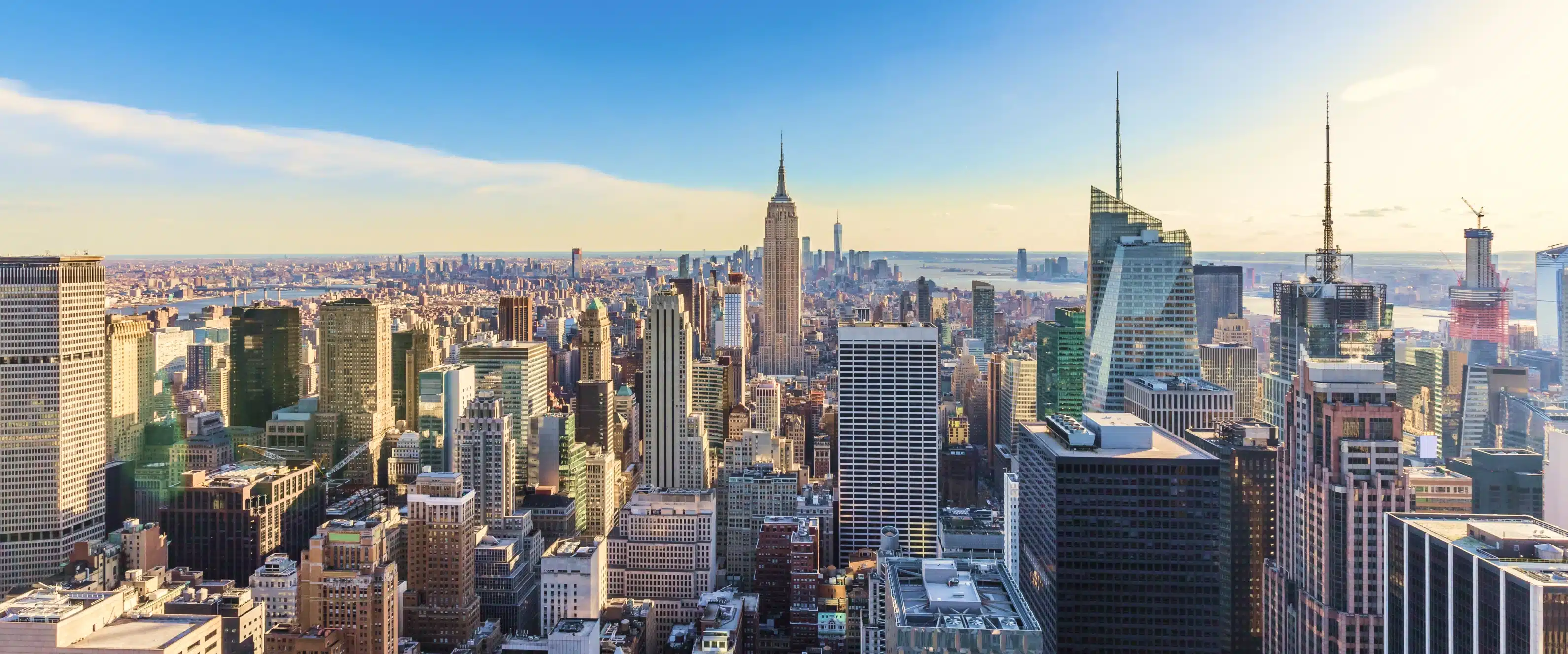
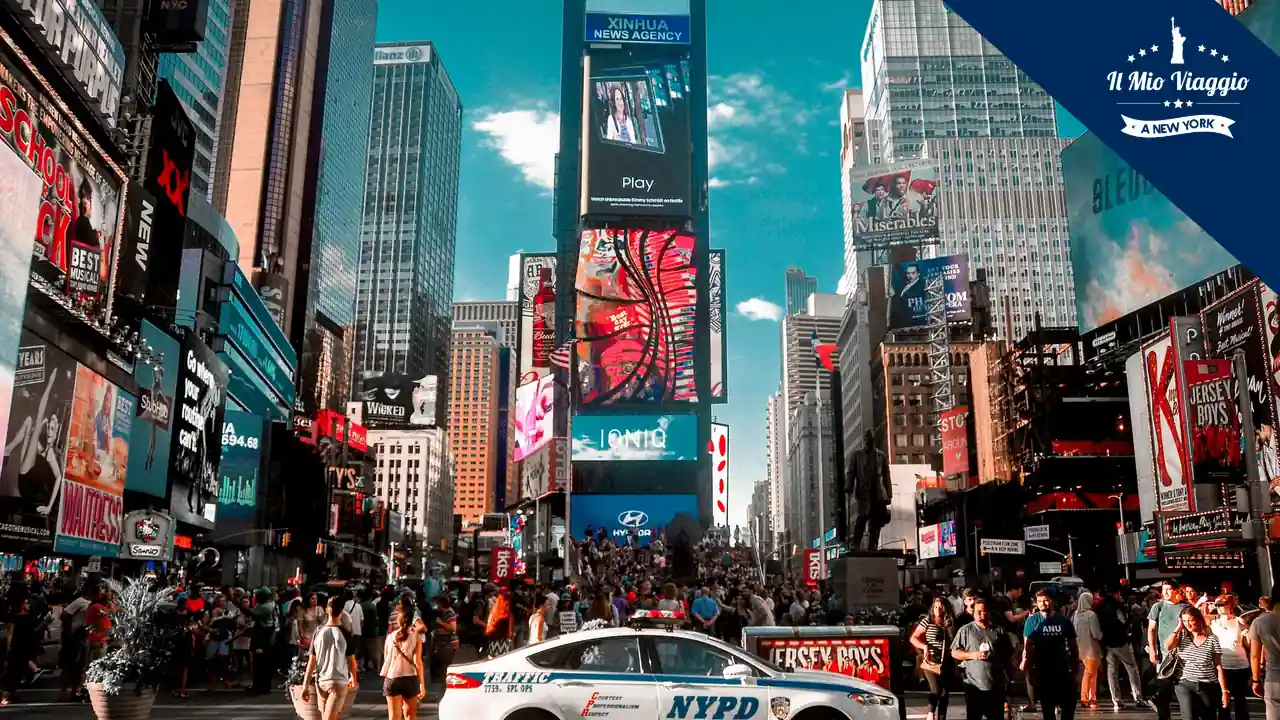
The five things to do in New York that no first-time visitor should skip are Central Park, the Statue of Liberty, one observation deck, the Brooklyn Bridge and Times Square. The park is free and opens at 6:00 AM, the ferry to the Statue starts at $35, and observation decks run from $53 to $59. To cover the city’s twenty icons you need at least four full days.
Things to do in New York: the short version
- The five icons: Central Park, Statue of Liberty, one observation deck, Brooklyn Bridge, Times Square.
- Free: Central Park, Brooklyn Bridge, the High Line, Times Square, the 9/11 Memorial plaza, the Staten Island Ferry.
- Observation decks: Top of the Rock from $59, The Edge from $59, Empire State Building from $55, One World Observatory from $53.
- Museums: MoMA from $30, Guggenheim from $35, American Museum of Natural History from $39, the Met $30.
- How long: 4 days for the Manhattan icons, a week to add Brooklyn and Coney Island.
- Getting around: the subway, running 24 hours a day across 472 stations.
- When to come: late spring and fall for the weather, December for the Christmas atmosphere.
Below are the twenty places that actually deserve your time, ranked by what matters most on a first visit. For each one you get hours, current prices, how to get there and the tips we collect on the ground, year after year, guiding travelers through this city. At the end you will find a comparison table, a map and everything worth sorting out before you fly.
Article Contents
- Things to do in New York if it’s your first time
- 1. Central Park
- 2. Statue of Liberty and Ellis Island
- 3. Empire State Building
- 4. Top of the Rock
- 5. Brooklyn Bridge
- 6. High Line
- 7. 9/11 Memorial and Museum
- 8. Times Square
- 9. Broadway and the musicals
- 10. MoMA
- 11. SoHo
- 12. Coney Island
- Eight more places to visit in New York
- New York attractions compared: prices, hours and visit times
- Where the twenty stops are
- What to know before you go to New York
- Our advice for your first trip to New York
Things to do in New York if it’s your first time
Nobody arrives in New York with a short list. The truth is that the city doesn’t fit into one trip, and trying to make it fit means spending your vacation running from one subway platform to the next. If your days are limited, build them around these five experiences: they cover the green, the water, the height, the bridge and the lights, which are five completely different souls of the same city.
- Central Park, to understand that Manhattan breathes. Free, open 6:00 AM to 1:00 AM, give it half a day.
- The Statue of Liberty, to see the city from the water the way the immigrants saw it. From $35, half a day including Ellis Island.
- One observation deck, just one: pick it for the view you want, not for the height. From $53 to $59, about an hour.
- The Brooklyn Bridge, on foot and in the right direction. Free, a good hour with photo stops.
- Times Square after dark, because in daylight it’s just a crowded intersection. Free, stay as long as you like.
Four full days fit all five plus one museum and a walk through SoHo. A week gets you to Brooklyn, to Coney Island and to the neighborhoods most visitors never reach. If you would rather not spend your first morning working out which way is uptown, the simplest fix is to start with a guided walk: half a day and the geography clicks, then you move on your own with a clear head.
Your first day, with us
Manhattan Walking Tour
The icons of Midtown and Downtown in one morning, with a guide who actually lives here. From $78, with support before and after you book.
1. Central Park
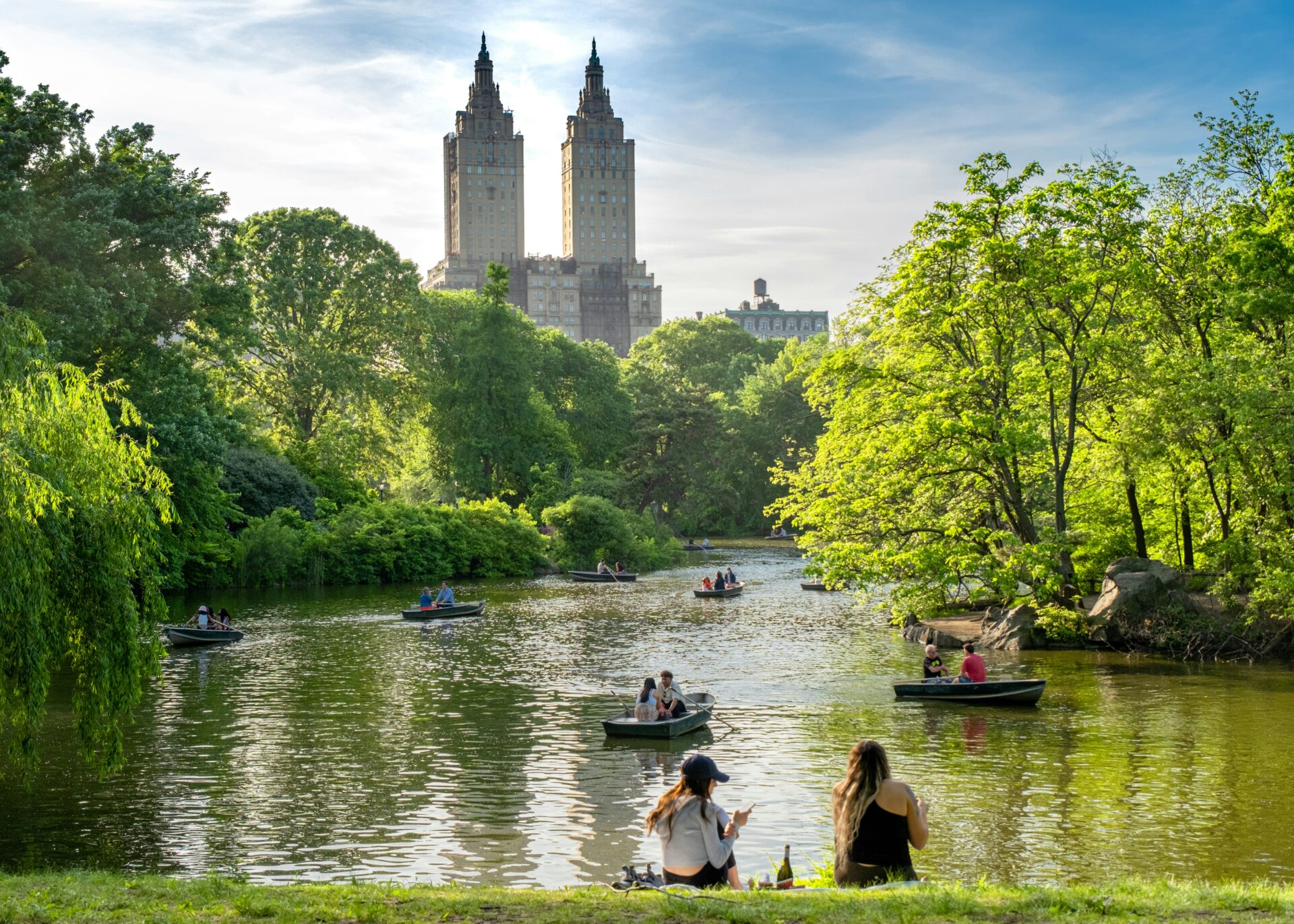
Manhattan’s green lung stretches across 843 acres between 59th and 110th Street, a piece of engineered wilderness dropped into the middle of the busiest island in America. Central Park is the stop everyone puts first, and that instinct is right: it’s a microcosm of views, stories and surprises that rewards a proper visit rather than a quick loop.
Built between 1857 and 1876, the park took more than 20,000 workers and the movement of millions of cubic yards of soil and rock to create paths and landscapes that now look like they were always here. Its construction also required the forced clearing and demolition of several settlements, including Seneca Village, a community founded by free Black landowners.
Central Park: what to see
The park holds far more landmarks than you can cover in one walk. If you love music, start with the memorial to John Lennon.
Strawberry Fields is a 2.5-acre area named after the song “Strawberry Fields Forever”. At its center sits a black and white mosaic reading “Imagine”, made by craftsmen from Naples and donated to the City of New York. Nearby stands the Dakota Building, where Lennon lived with Yoko Ono until his murder, which happened right at the entrance.
Another highlight is Belvedere Castle, which has housed the city’s official weather station since 1919. From its tower you get panoramic views and some of the best birdwatching in Manhattan.
The Bethesda Terrace and its fountain are the heart of the park. At the center stands Angel of the Waters, the only sculpture commissioned as part of the original design. Other essentials include Bow Bridge, a cast iron span reaching 60 feet across the lake, and The Mall, a tree-lined promenade holding over 150 American elms, one of the largest surviving stands in the country.
Central Park: what to do
The best way to cover the park in a few hours is to rent a bike in Central Park, from $25. The perimeter road, the famous Loop, runs 6.1 miles and is one-way counterclockwise. Remember that, because riding against traffic is the fastest way to get yelled at by locals. If you want something slower, there are rowboats at the Loeb Boathouse on the lake.
For something different, catch a show at the Swedish Cottage Marionette Theatre, a cottage shipped from Sweden in 1876 that now stages puppet shows. Traveling with kids, don’t skip the Central Park Zoo, home to over 130 species including coyotes, raccoons and foxes. The snowy owl alone is worth the detour.
In winter the park opens the Wollman Rink for ice skating, an icon you have already seen on screen in Home Alone 2, Love Story, Night at the Museum and Limitless.
Central Park: hours and access
The park is open every day from 6:00 AM to 1:00 AM. Access is free, apart from a few attractions such as the Zoo. The best moments to visit are early morning, when it’s emptiest, or late afternoon for the light.
Getting there is easy from either side. On the west, take the B and C lines (72nd St, 81st St, 86th St). On the east, the N, R and Q lines stop at 5th Avenue and 59th St. Any of these leaves you a few steps from an entrance.
A full walking itinerary through the park takes 4 to 5 hours, so plan on at least half a day if you want to do it properly rather than tick it off.
Our tip
- Enter at Columbus Circle instead of 59th and Fifth Avenue: same starting point, half the crowd.
- If you rent a bike, the Loop is one-way counterclockwise. Going the wrong way is the fastest route to getting yelled at.
- Restrooms are not every hundred yards. The reliable ones are at the Loeb Boathouse, the Zoo and Bethesda Terrace.
2. Statue of Liberty and Ellis Island
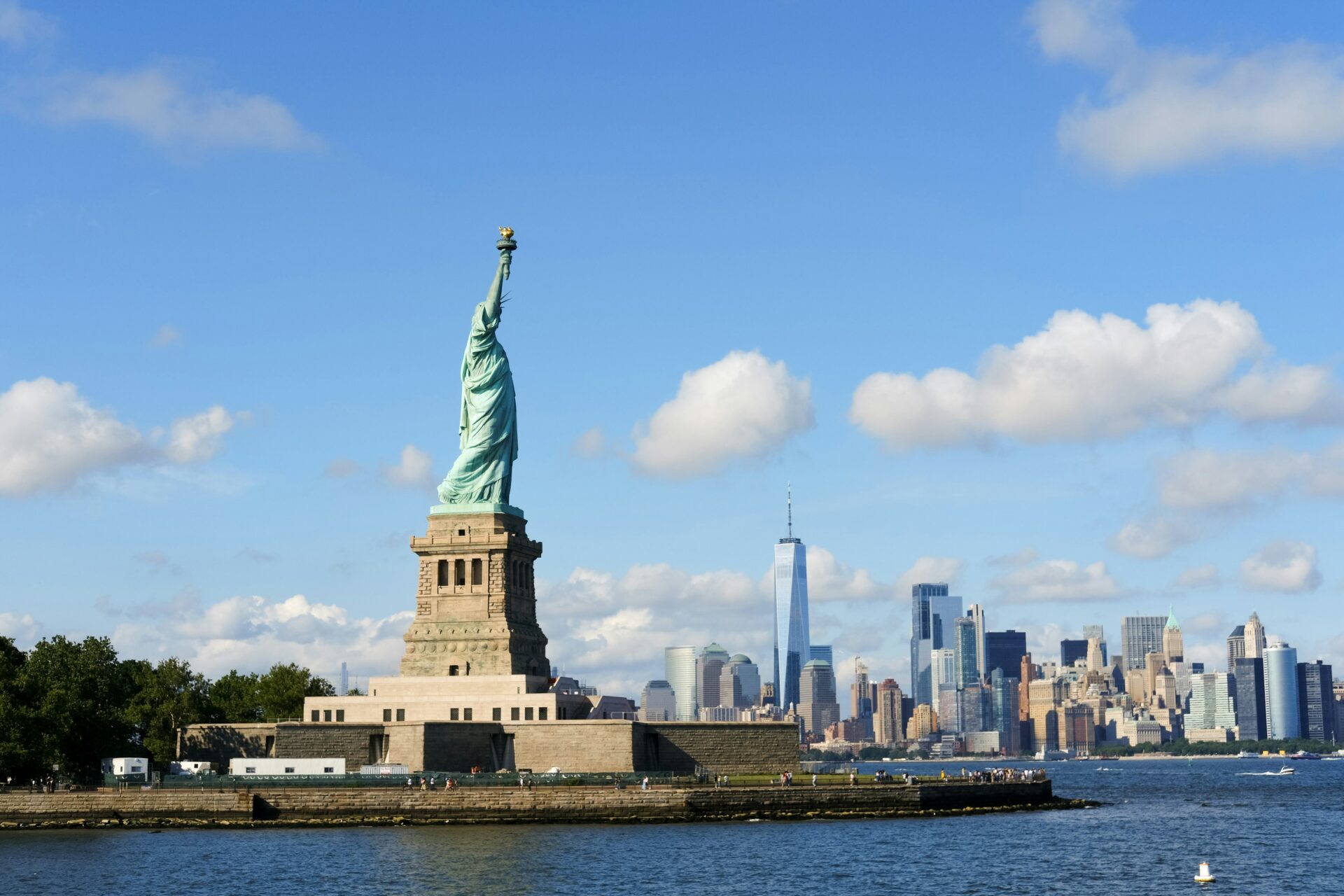
Picture yourself on a boat pulling away from the noise of Manhattan: the air cools, and slowly the Statue of Liberty stops being that small figure you squint at from Battery Park and becomes a copper giant standing over you. She is a symbol of hope and the first thing millions of migrants saw of the New World, while Ellis Island was the last bureaucratic hurdle standing between them and American soil.
Statue of Liberty: how to get there
The only way to reach Liberty Island is on the official Statue City Cruises ferries, which leave from Battery Park in Manhattan or from Liberty State Park in New Jersey. Boats run every day from 8:30 AM to 3:30 PM, departing every 20 to 30 minutes. To skip the ticket line, our Statue of Liberty and Ellis Island tickets start at $35.
To get to Battery Park take the 4 or 5 to Bowling Green, the R to Whitehall Street or the 1 to South Ferry. The crossing takes about 15 minutes and is your first real look at the Manhattan skyline from the water. Budget at least half a day to see both islands without rushing.
Ellis Island: what to see
Ellis Island houses the Immigration Museum, set inside the building that once served as the processing center. Inside you will find stories, documents, photographs and personal belongings of the 12 million immigrants who passed through here between 1892 and 1954. Italians were the largest single national group, roughly 4 million people, peaking between 1900 and 1915. If you have a great-grandparent who left for America, there is a good chance they stood in these halls.
The Peopling of America Center traces immigration from Native nations to the present day. Just as compelling is the American Family Immigration History Center, where you can search a database of passenger names from every ship that docked here, hunting for your own ancestors. Outside stands the American Immigrant Wall of Honor, carrying over 700,000 names.
Statue of Liberty: useful tips
The base ticket for both islands starts at $35 for adults and covers the ferry, island access and the audio guide. It does not include the pedestal or the crown, which have to be reserved separately and well in advance: the climb to the crown is 162 steps up a tight spiral staircase, and it sells out months ahead in summer.
At the dock, expect airport-style security screening. Early morning is the quietest slot, especially in high season. If you’re short on time, the free alternative is the Staten Island Ferry, which passes near the statue without stopping and runs free 24 hours a day: you don’t set foot on the island, but you still get the photograph.
America from the water
Statue of Liberty and Ellis Island Tickets
Ferry, access to both islands and the audio guide included in the price.
3. Empire State Building
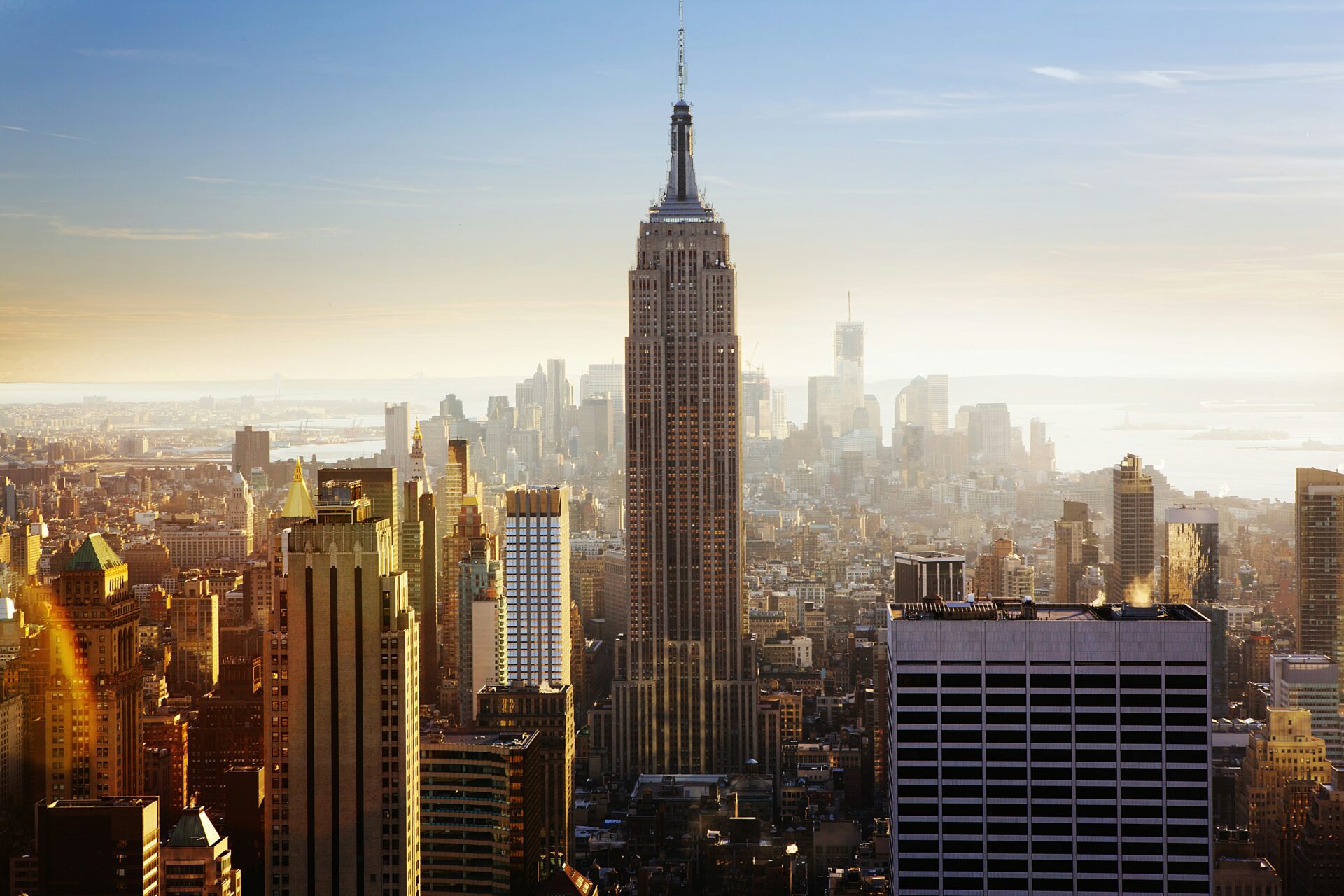
The most recognizable silhouette in the skyline, the Empire State Building is the landmark you have seen a hundred times on screen before you ever stand under it. This 103-floor giant is still the most photogenic observation deck in the city.
From the 86th floor you get a 360-degree view that takes in the Brooklyn Bridge, Central Park and the Statue of Liberty, with both an enclosed gallery and an open-air terrace. Higher still is the Top Deck on the 102nd floor, over 1,250 feet up: fully enclosed behind floor-to-ceiling glass, and on clear days the view runs about 80 miles, reaching six states.
Empire State Building: hours and tickets
The building opens every day, with hours shifting between 9:00 AM and midnight depending on the season. For example:
- February to March: 10:00 AM to 10:00 or 11:00 PM
- May to June: 9:00 AM to midnight
- Last entry: 45 minutes before closing
Our Empire State Building tickets start at $55 for adults. The one worth knowing about is the AM/PM Experience, which lets you go up twice in the same day: once in daylight and once after dark, when the whole grid lights up beneath you.
The symbol of Manhattan
Empire State Building Tickets
Skip the ticket desk and pick your time slot. With the AM/PM option you go up twice in one day, in daylight and after dark.
Empire State Building: fun facts
Despite weighing roughly 365,000 tons, the Empire State Building went up in just 13 months and 15 days, a record for its era. Opened on May 1, 1931, it held the title of tallest building in New York for about 40 years, until the Twin Towers rose downtown.
The roof was originally designed as a mooring mast for airships, an idea abandoned after a single terrifying attempt. Today the building is known for its LED lighting system, capable of 12 million color combinations and changed for events and holidays. Among the lesser-known details: an old bank vault in the basement and underground wind tunnels.
4. Top of the Rock
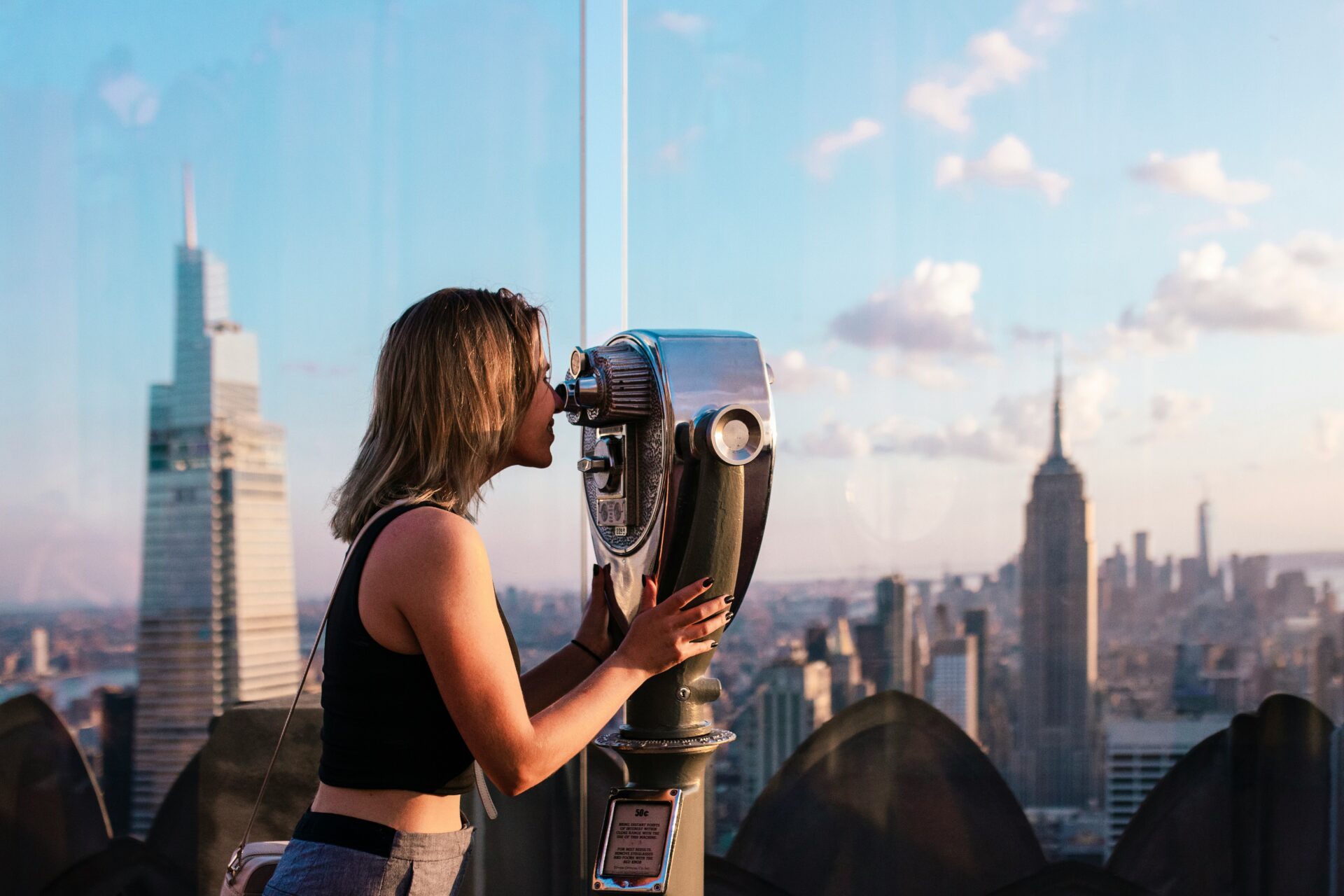
Sitting at 30 Rockefeller Plaza, Top of the Rock offers three levels of terraces with some of the most postcard-perfect views in the city. It isn’t the tallest deck, and that’s exactly why it wins: from up here you can see the Empire State Building, which is impossible when you’re standing on it.
There’s also a timely reason it’s in demand this season: for the FIFA World Cup 2026, hosted across New York and New Jersey, the 70th floor terrace was chosen as the event’s official viewing point.
Top of the Rock: what you can see
The terraces sit across three levels: the 67th, 69th and 70th floors. The top one has no protective glass, which means photographs without reflections. Looking north you get Central Park in its full rectangle, and to the south the Empire State Building dominates, at its best once it’s lit. On clear days the view reaches One World Trade Center and the Statue of Liberty.
Top of the Rock: why choose it
Top of the Rock stands 850 feet tall, the lowest of the major decks. That turns into its advantage: it delivers the best view of Central Park and of the Empire State Building. Seeing that enormous green rectangle stretching north, hemmed in by concrete on every side, is the moment Manhattan’s design finally makes sense.
Unlike the Empire State Building, which has protective bars, Top of the Rock uses plexiglass panels that block the wind while keeping the view clean. If you want to compare every deck before committing, all of them are in our New York tickets section, with prices and time slots side by side.
Top of the Rock: hours and prices
The deck is open every day from 9:00 AM to 10:00 PM, with the last elevator at 9:10 PM. Our Top of the Rock tickets start at $59 for adults, and booking online with a date and time is the difference between walking in and waiting outside.
Since 2023 there’s also the Skylift, a rotating glass-floor platform that rises above the 70th floor. It isn’t included in the base ticket and costs an extra $35. The average visit runs 45 to 60 minutes, though there’s no time limit and you can stay on the terraces until closing.
Central Park from above
Top of the Rock Tickets
The only terrace where you see the park and the Empire State Building in one frame. Pick your date and time when you book.
5. Brooklyn Bridge
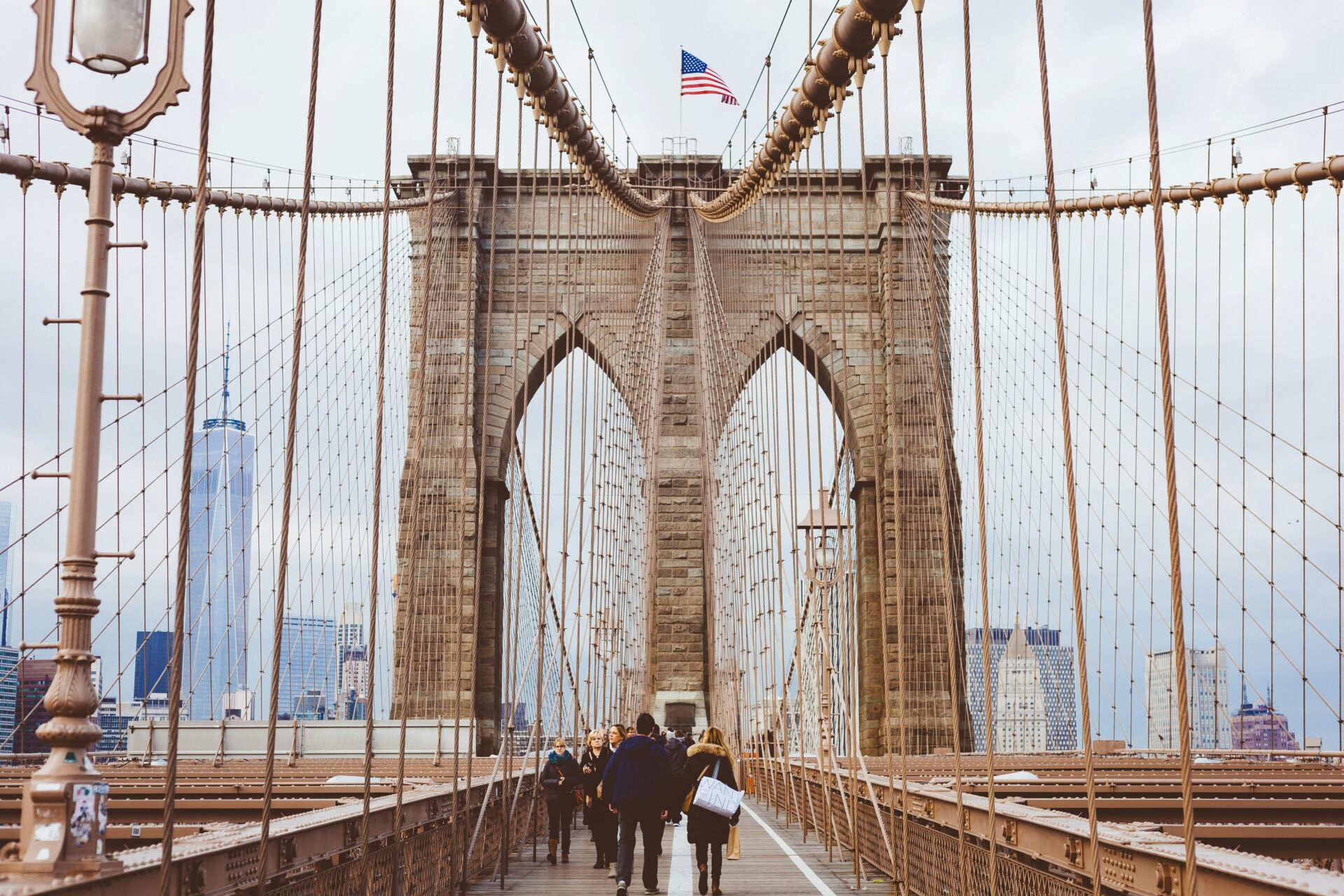
When it was finished in 1883 it was the longest suspension bridge in the world. Its gothic granite arches were built to last forever, and to convince skeptical New Yorkers that it was safe, 21 elephants from the Barnum circus were marched across it. Walking it is still one of the few free experiences in this city worth as much as a fifty-dollar ticket.
Brooklyn Bridge: the pedestrian walkway
The walkway sits above the car lanes, so you get the view without the traffic beside you. The full crossing is roughly 1.3 miles, rising gently toward the center before dropping back down. One crossing takes 30 to 45 minutes at a relaxed pace, but with photo stops it’s better to allow a full hour.
Watch out for the bike lane, because cyclists move fast and they are not slowing down for anyone. There’s one detail our founder Piero Armenti loves showing travelers and that almost nobody notices: walking on the wooden planks, look down between the boards and you can see water moving beneath you. The Brooklyn Bridge doesn’t cross a road, it crosses the East River directly, and you only realize it when you look at your feet.
Our tip
Most people start in Manhattan and walk toward Brooklyn, which puts the best view behind them the whole way. After years of walking this bridge with our travelers, our advice is the opposite: start in Brooklyn and walk toward Manhattan, with the skyline in front of you from the first step. Take the A or C to High St and begin there.
Brooklyn Bridge: when to visit
The best times to cross are sunrise or sunset. At dawn it’s nearly deserted, while at sunset the light turns the skyline gold. For the best photographs go at dusk, when the city lights start switching on but the sky still has color in it.
The bridge is free and open around the clock, but skip it on very windy days, because the gusts intensify badly out over the water. In summer bring a bottle: there are no restrooms and no kiosks along the way. If you’d rather walk it at sunset with a guide, there’s our Brooklyn Bridge tour at sunset, from $65.
Brooklyn Bridge: the view of Manhattan
Walking from Brooklyn toward Manhattan puts the city in front of you the entire way, which is the right angle for skyline shots. Halfway across you can also pick out the Statue of Liberty in the distance. Along the crossing you’ll recognize the Empire State Building, the Chrysler Building and the Freedom Tower. The Financial District towers are the ones that get you in the evening, when the lit windows turn into geometry.
6. High Line
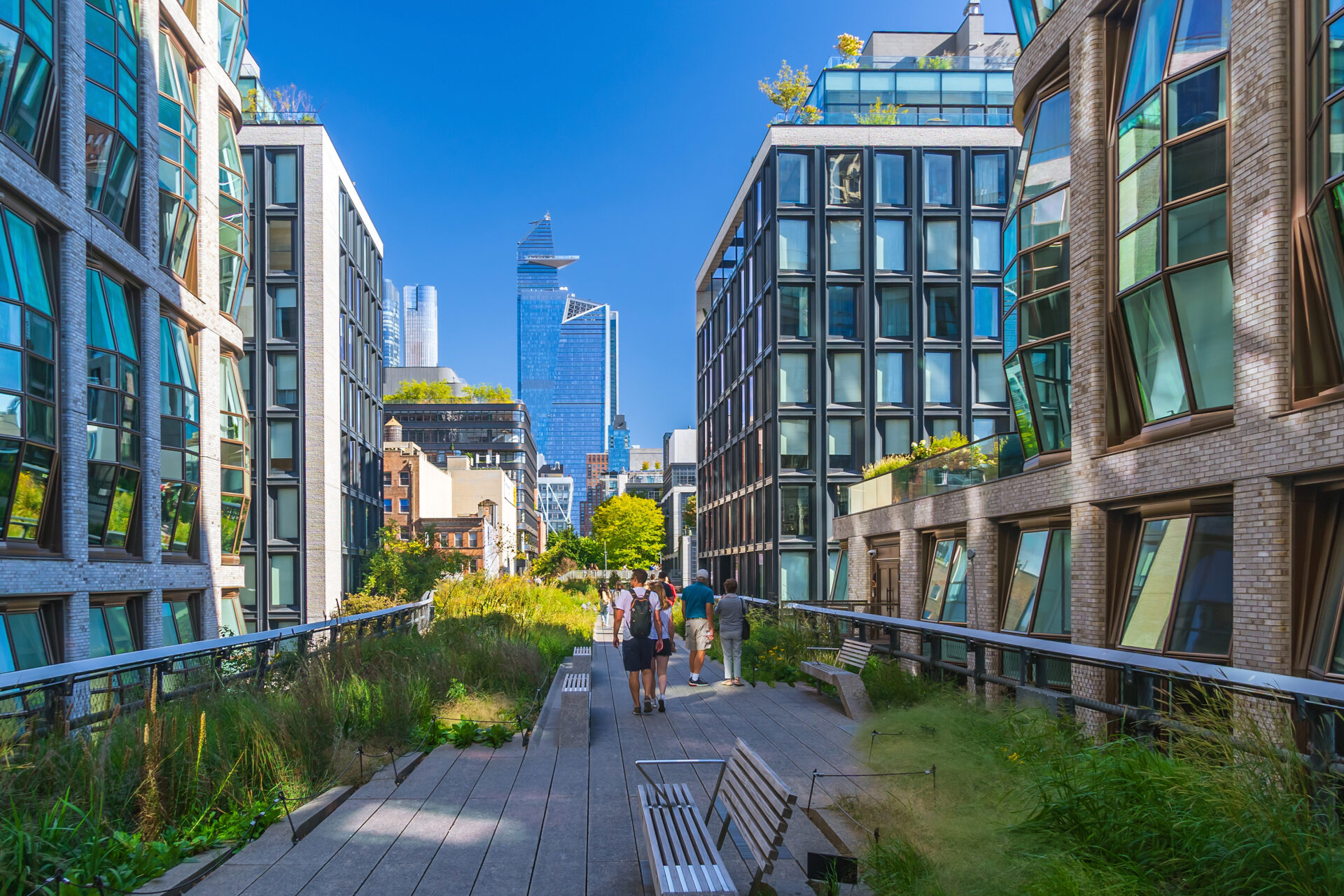
Picture an elevated freight railway, abandoned for decades, rusting and scheduled for demolition, that instead of disappearing becomes the coolest park in the world. The High Line is one of the most successful urban redevelopment projects anywhere, and it lets you walk the city from about 30 feet above the street.
High Line: what it is
The elevated West Side Line opened in 1934 and was decommissioned in 1980. The transformation started in 2006, with the first section opening in 2009, the second in 2011 and the third in 2014. Today the park draws over 5 million visitors a year, more than the Statue of Liberty.
The design takes its cue from the wild landscape that grew on its own across the abandoned tracks, and it now holds over 200 plant species. In several stretches the original rails were kept and built into the path, so the industrial past and the green present sit side by side.
High Line: route and entrances
The park runs 1.45 miles through Manhattan’s West Side, from the Meatpacking District up to Hudson Yards. The full walk takes about an hour including stops. There are 11 access points, 6 of them accessible by elevator. The main entrances are at Gansevoort Street to the south and 34th Street to the north. It opens daily at 7:00 AM, closing time shifting by season (7:00 PM in winter, 11:00 PM in summer). Entry is free.
Our tip
Piero walked the High Line on December 24, after a snowfall: he found it almost deserted, but swept by freezing gusts coming off the Hudson hard enough to make the walk genuinely difficult. In winter the park is beautiful and empty, but dress as if you were going out on a boat, not for a stroll around town. The stretch between 14th and 20th is the most exposed.
High Line: what to see along the way
Two spots stand out for photographs: the 10th Avenue Square and Overlook, an urban amphitheater with a window that frames Manhattan traffic like a film still, and the higher stretches to the north, where the Midtown skyline fills the background. Also worth stopping for are the Diller-von Furstenberg Sundeck, looking out over New Jersey, and The Rail Yards.
Nearby you’ll find Chelsea Market, housed in the former Nabisco factory where the Oreo was invented, and the Whitney Museum of American Art at the southern end. At the northern end sits Hudson Yards, the neighborhood born from the largest private redevelopment in American history, and home to The Edge.
If you want to walk the park with a guide and continue into the neighborhoods around it, there’s our High Line, Hudson Yards and Greenwich Village tour, from $65.

7. 9/11 Memorial and Museum
Writing about the 9/11 Memorial and Museum isn’t like describing any other New York attraction: this is the city’s wound. The memorial stands exactly where the Twin Towers stood, and the visit leaves a mark that outlasts the trip.
9/11 Memorial: what to see
The Reflecting Pools, two square basins occupying the exact original footprints of the Twin Towers, are the heart of the memorial. Water falls 30 feet toward a central void that appears to have no bottom. Around the perimeter are inscribed the names of the 2,983 victims of the September 11, 2001 attacks and of the February 26, 1993 bombing. The sound of the water muffles the city behind you. Among the oaks surrounding the plaza stands the Survivor Tree, the only tree recovered alive from the rubble.
9/11 Museum: main exhibits
The museum is almost entirely underground: those escalators take you physically down to the original foundations of the World Trade Center. In Foundation Hall you stand before the last original slurry wall left intact and the Last Column, the final beam removed from the site. The In Memoriam Exhibition is the hardest and the most necessary room, dedicated to the lives of the victims through photographs and objects donated by their families.
9/11 Memorial: hours and tickets
The Memorial plaza is free and open daily from 8:00 AM to 8:00 PM. The Museum opens Wednesday through Monday, 9:00 AM to 7:00 PM, closed on Tuesdays. Our 9/11 Memorial Museum tickets start at $38 for adults, $32 for seniors over 65 and teens 13 to 17, $25 for children 7 to 12, and free for under-7s.
Entry is free on Mondays from 5:30 PM to 7:00 PM, but it requires an online reservation and those slots go fast. Be realistic about it: ninety minutes is not enough to see everything, so if you take that window you will have to choose what to skip. Plan on two hours for a full visit.
The memory of Ground Zero
9/11 Memorial Museum Tickets
Entry to the underground museum built on the original foundations of the Towers. Reduced rates for seniors, teens and children.
8. Times Square
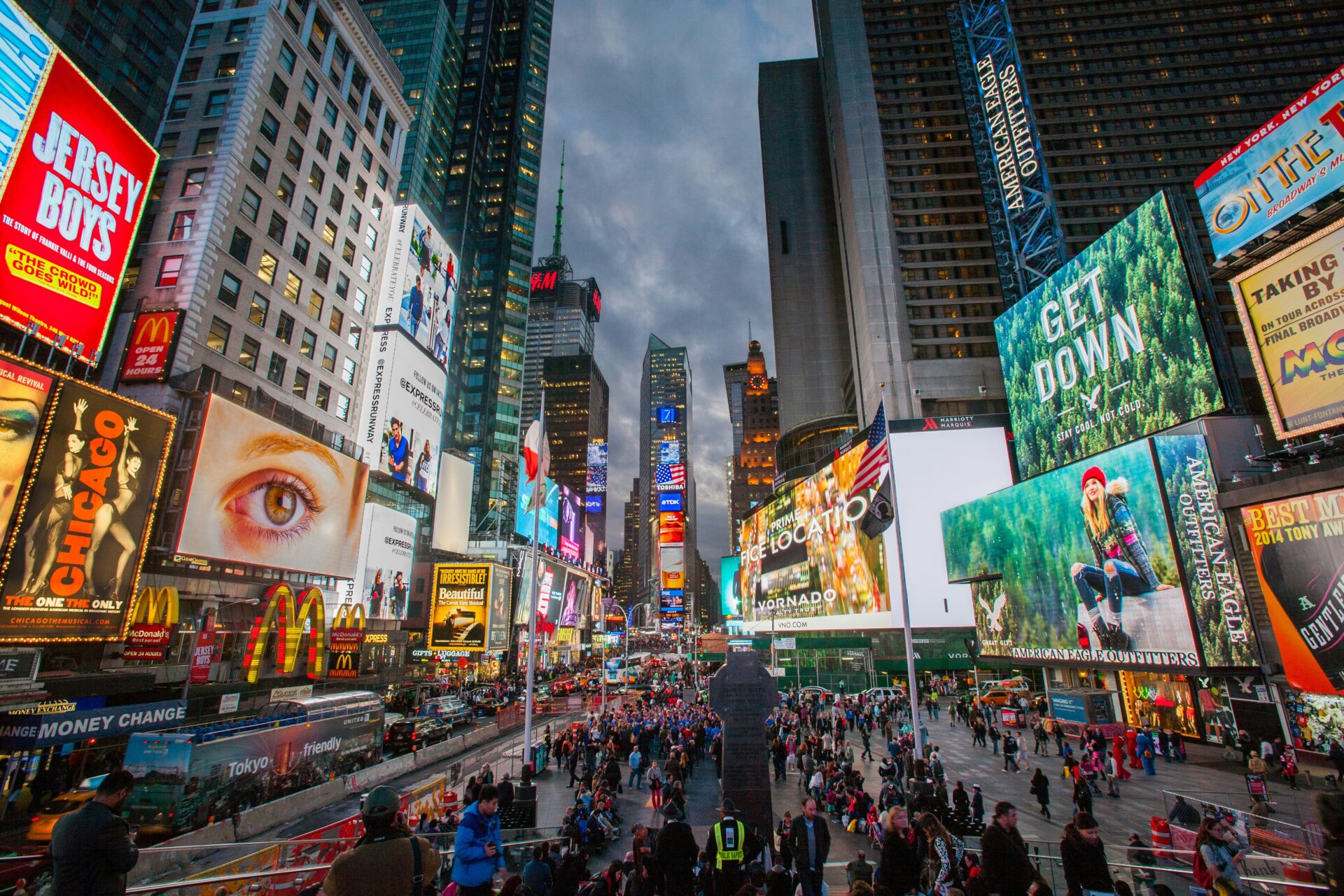
If Manhattan is the body of New York, Times Square is its central nervous system on too much caffeine. This junction, where Broadway crosses Seventh Avenue, is the most visited spot in the city. One recommendation: go after dark, because in daylight it’s just a crowded intersection with billboards.
Times Square: what to expect
Times Square isn’t a square in any traditional sense, it’s an intersection turned into a canyon of light. The screens create a spectacle visible blocks away once night falls. The central area, between 42nd and 47th Street, is fully pedestrian.
The best vantage point is above the Broadway ticket booth: climb the red steps, sit down, and watch the human theater underneath you. You’ll see everything, from street performers like the famous Naked Cowboy to costumed characters (photograph them and expect a firm request for a tip).
Times Square: when to go
Times Square is permanently crowded, but early morning gives you a calmer version of it. The real experience is after sunset, when the light hits maximum density. For something genuinely once-in-a-lifetime there’s New Year’s Eve, when around a million people pack in to watch the ball drop from One Times Square at 11:59 PM.
Times Square: three insider tips
- The Midnight Moment: few visitors know this, but every night from 11:57 PM to midnight the digital billboards synchronize to show a piece of contemporary digital art. For three minutes the advertising disappears and the square turns into a coordinated gallery.
- Where to eat: Times Square is the land of expensive chains. Walk a few blocks west to 9th Avenue, in Hell’s Kitchen, and you’ll find real restaurants at human prices in under ten minutes on foot.
- Panoramic photos: head to 47th Street and shoot facing south. That gives you the perfect angle on the “bowtie”, the point where Broadway and 7th Avenue cross.
Times Square: nearby attractions
The surrounding area is the heart of the Theater District, with over 39 historic theaters. Nearby you’ll find flagship stores including the Disney Store, M&M’s World and Hershey’s Chocolate World. For something indoors you can grab Madame Tussauds New York tickets from $50, with over 200 wax figures, three minutes away on foot.
9. Broadway and the musicals
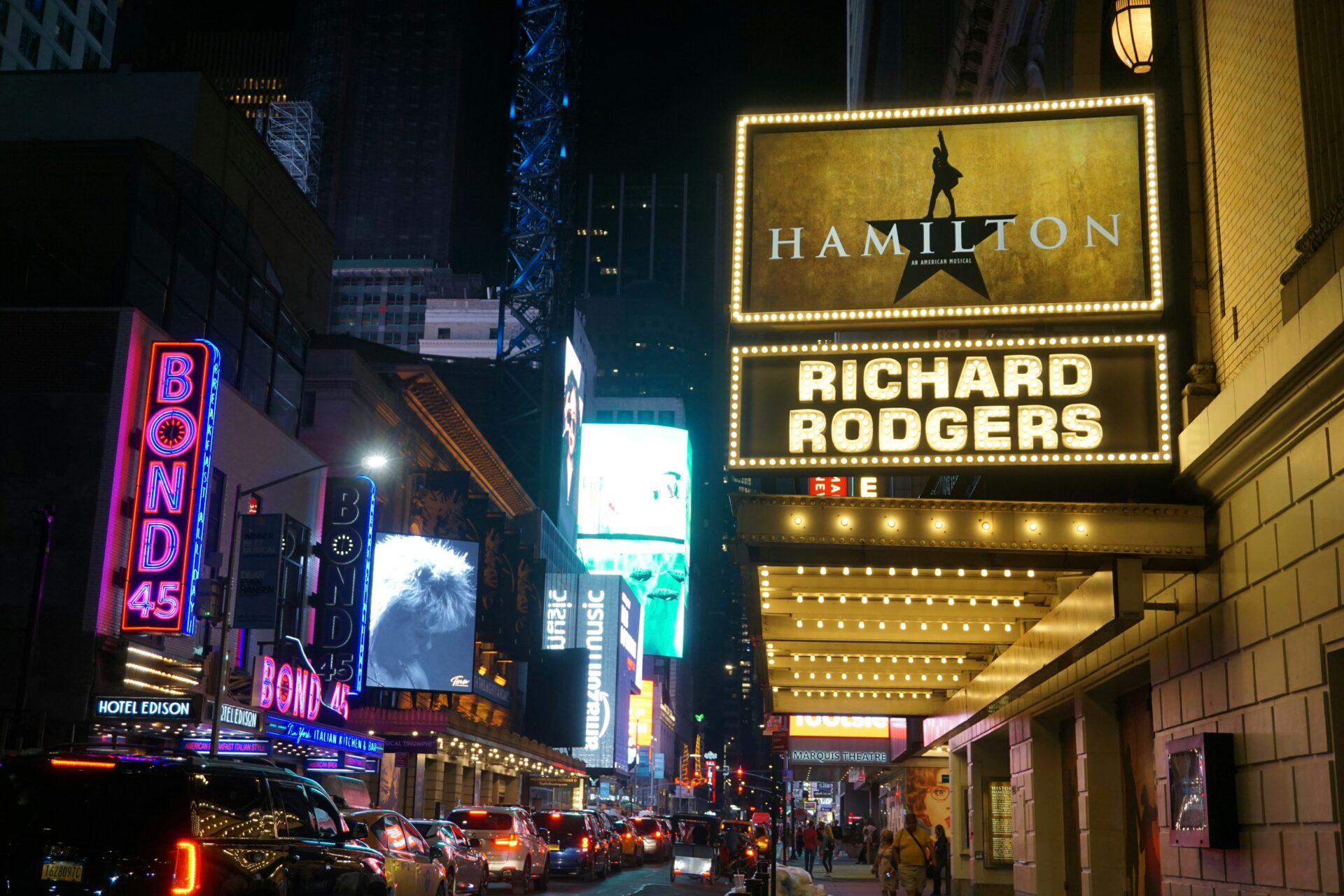
You can see every landmark on this list, but until you’re sitting in a historic theater with the lights going down and the orchestra hitting the first notes, you haven’t touched the real soul of this city. The Theater District, with its 41 active theaters, is the beating heart of American entertainment.
On Broadway there are no good actors, only the best ones. Every night thousands of performers deliver live with a precision that’s hard to believe until you watch it. Whether it’s a classic like The Lion King or a critical phenomenon like Hamilton, the production level, from sets to costumes to lighting, has no equal anywhere else.
Broadway: how to choose a show
It comes down to taste, but there’s a practical rule if English isn’t your first language: heavily danced, visual musicals carry themselves, while dialogue-driven shows get exhausting fast. Among the most loved are classics like The Lion King and Chicago, or newer productions like MJ The Musical and The Great Gatsby. Families should check age limits: many theaters don’t admit children under 4.
Broadway: where to buy tickets
You can book Broadway show tickets well in advance from $89, with the price shifting by show and seat. Alternatively, the TKTS booths in Times Square offer 30 to 50% off for same-day performances, but you have to queue and take whatever is left.
To see every show currently running with dates and seats, the full catalog is in our New York musicals section.
A night at the theater
Broadway Show Tickets
Guaranteed seats for the shows that sell out, without queueing at the box office and without gambling on availability.
Broadway: the most famous theaters
Among the best known are the Gershwin Theatre (1,933 seats), home of Wicked, the Minskoff Theatre (1,621 seats), which hosts The Lion King, and the Majestic Theatre, the historic house of The Phantom of the Opera. A show runs 2 to 3 hours on average, intermission included.
10. MoMA
If you want to understand why this city became the world capital of creativity, walk into the MoMA. Forget the idea of a boring museum: the Museum of Modern Art, on 53rd Street, is a bright and restless place holding one of the most important collections on the planet, with over 150,000 works.
MoMA: must-see works
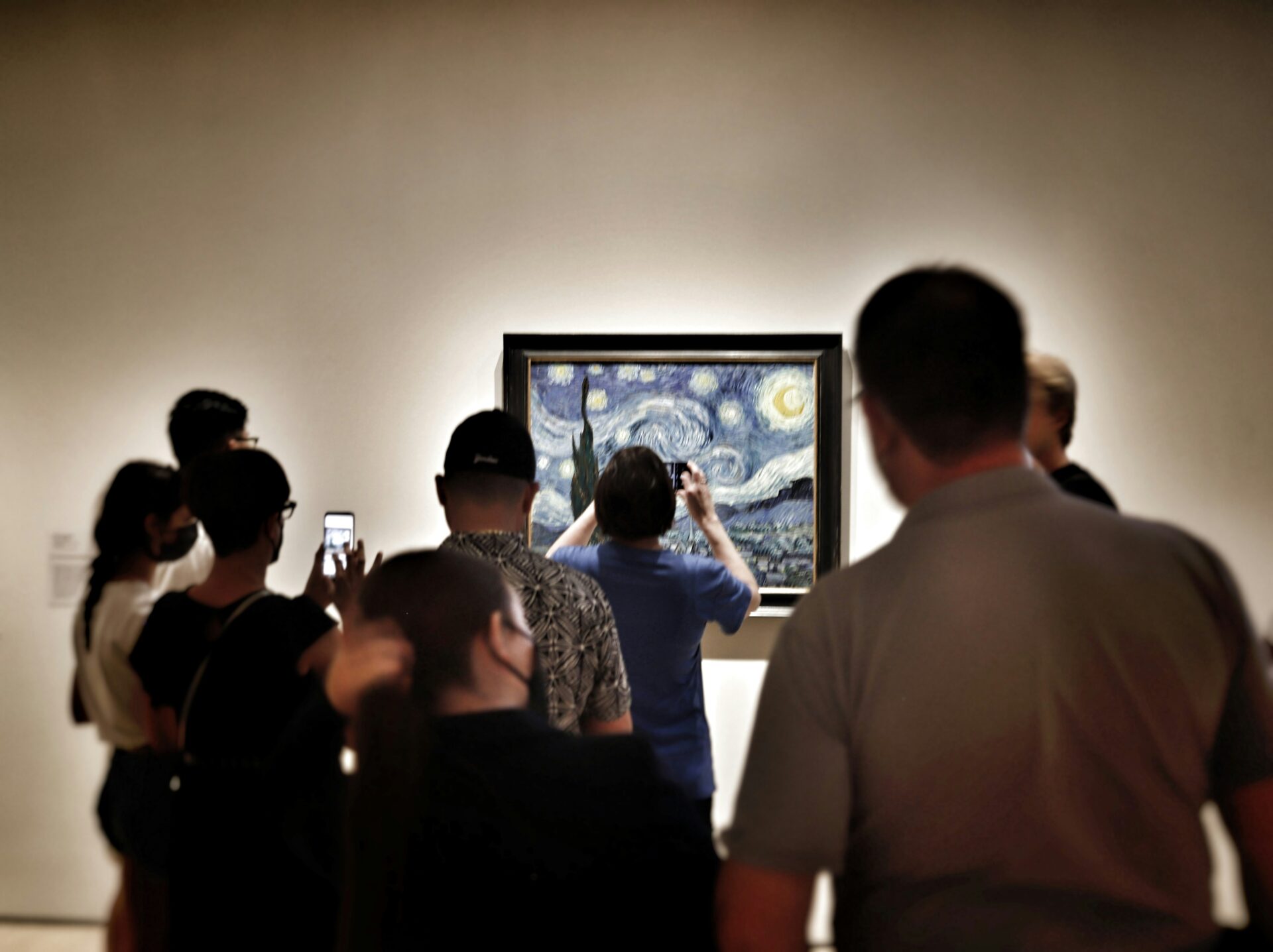
Walking into the fifth floor galleries is like meeting celebrities in person. You come face to face with Van Gogh’s The Starry Night (brace yourself, there’s always a crowd), Monet’s Water Lilies filling entire walls, and Andy Warhol’s Campbell’s Soup Cans.
Other treasures include Picasso’s Les Demoiselles d’Avignon, considered the manifesto of Cubism, Salvador Dalí’s The Persistence of Memory and Marc Chagall’s I and the Village. Jackson Pollock’s One: Number 31 is Abstract Expressionism at its most complete.
MoMA: hours, prices and free entry
The museum opens every day from 10:30 AM to 5:30 PM, staying open until 8:30 PM on Fridays. Our MoMA tickets cost $30 for adults, $25 for seniors, and entry is free for under-16s. The ticket covers all galleries and special exhibitions, plus admission to MoMA PS1 in Queens.
One clarification matters here, because most travel sites get it wrong: the free Friday evening entry from 5:30 PM to 8:30 PM, sponsored by UNIQLO, applies only to New York State residents, with ID and a mandatory reservation. If you’re flying in, you pay full price. There is good news though: as of 2026 MoMA PS1, the contemporary art branch in Queens, is free for everyone.
MoMA: tips for your visit
Start on the fifth floor, where the headline works are, and walk down. Two hours covers the essentials, half a day lets you actually breathe. Sundays are quieter, while rainy days are the most crowded of all: it’s the classic bad-weather plan, and everyone in the city knows it.
- The Design Store: even if you don’t do souvenirs, the MoMA store is a temple of taste, with household objects at prices that won’t hurt.
- The museum app: bring earbuds. MoMA offers a free audio guide on your own phone, with Wi-Fi throughout and commentary from artists and curators.
- Breaks: there’s a café on the second floor overlooking the sculpture garden, and The Modern, a Michelin-starred restaurant, inside the building.
There’s a specific moment, up on the fifth floor, when you turn a corner and there it is: The Starry Night is smaller than you pictured and holds you far longer than you planned. It’s worth arriving with the ticket already in your pocket, because the line at the desk eats exactly the time you’d want to spend standing in front of it.
Modern art in Midtown
MoMA Tickets
Entry to all galleries and temporary exhibitions, MoMA PS1 included. Skip the desk and go straight to the fifth floor.
11. SoHo
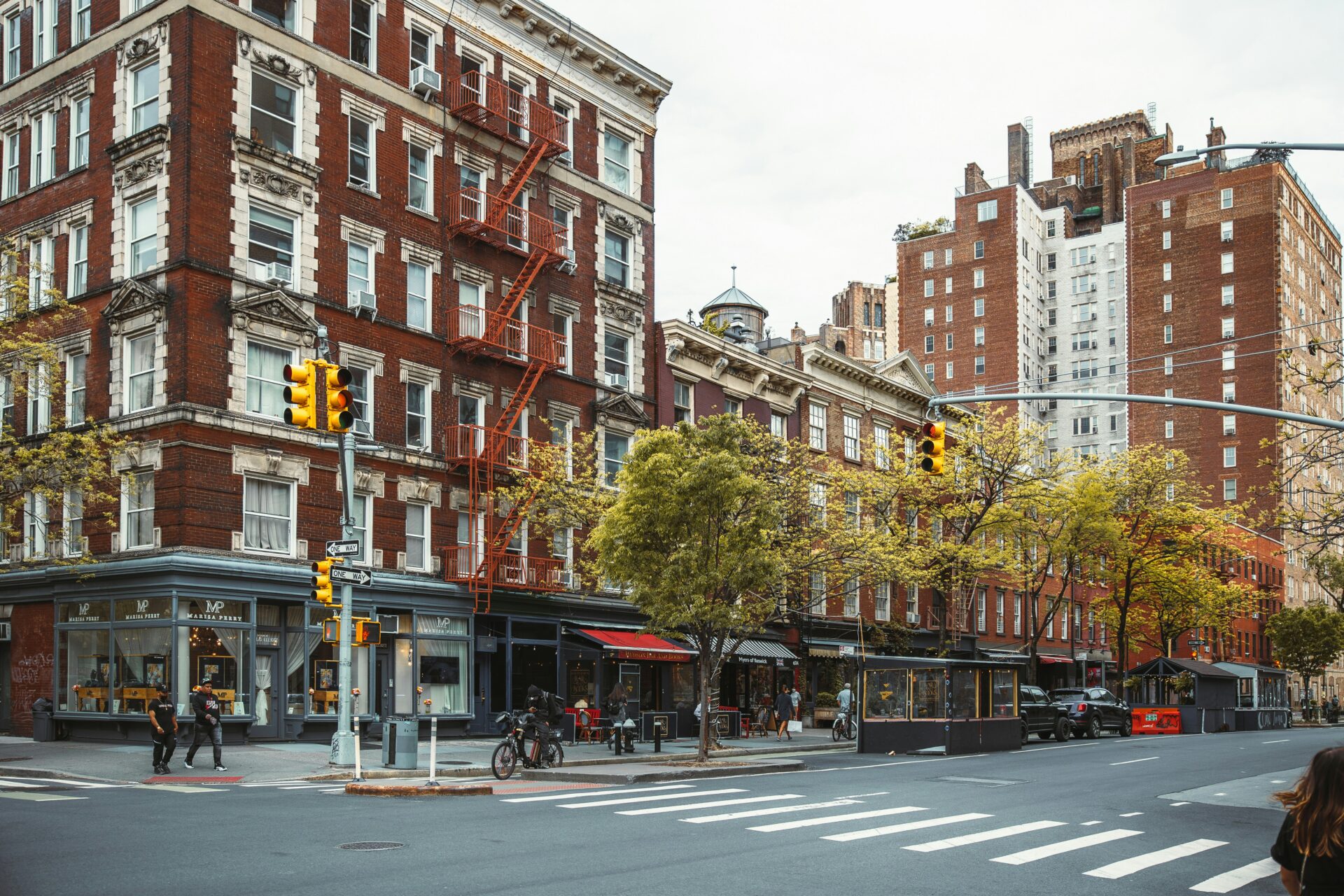
South of Houston Street, between Canal Street and Sixth Avenue, sits SoHo (the name is short for South of Houston Street), the neighborhood where luxury meets cobblestones. The atmosphere is industrial history wearing a very expensive coat, and even the streetlights here are landmarked.
SoHo: what to see
The Cast Iron District is the historic core of SoHo, where you’ll find the iconic cast iron facades dating to the mid-1800s. Once factories and textile warehouses, they now hold the most expensive lofts in the city. Greene Street has the longest continuous row of them, particularly between Canal and Grand Street. Don’t miss the Queen and King buildings (numbers 72 and 28), masterpieces by architect Isaac Duckworth.
SoHo changes character depending on the hour and the day you arrive, and the gap between a photogenic neighborhood and an unwalkable crush sits entirely in that timing.
Our tip
- On our last walk through, around ten on a weekday, the cobblestone streets were half empty and quiet. On a Saturday afternoon Broadway becomes nearly impassable.
- Don’t compromise on shoes: the Belgian blocks on Greene, Mercer and Wooster look beautiful in photos and are merciless with heels.
- The best cast iron facades to photograph are on Greene Street between Canal and Grand, with morning light coming in from the east.
SoHo: shopping and galleries
SoHo is the shopping heart of New York. On Broadway you’ll mostly find big chains like H&M, Uniqlo and Nike. For the exclusive boutiques head toward Prince Street, Broome Street and Spring Street, where Louis Vuitton, Chanel and Prada keep their flagships. The neighborhood also holds art galleries, a legacy of its past: in the 1980s SoHo was the world capital of contemporary art, before most galleries moved north to Chelsea.
SoHo: a paradise for foodies
You eat well in SoHo, full stop. It’s home to institutions and to pastry that became legend: the Cronut, Dominique Ansel’s croissant-donut hybrid, was born here. Our Italian heart, though, belongs to Piccola Cucina Osteria Siciliana, at 196 Spring Street, run with real conviction by Philip Guardione, recognizable by his Sicilian straw hat. For every other neighborhood and price range, there’s our guide on where to eat in New York.
12. Coney Island
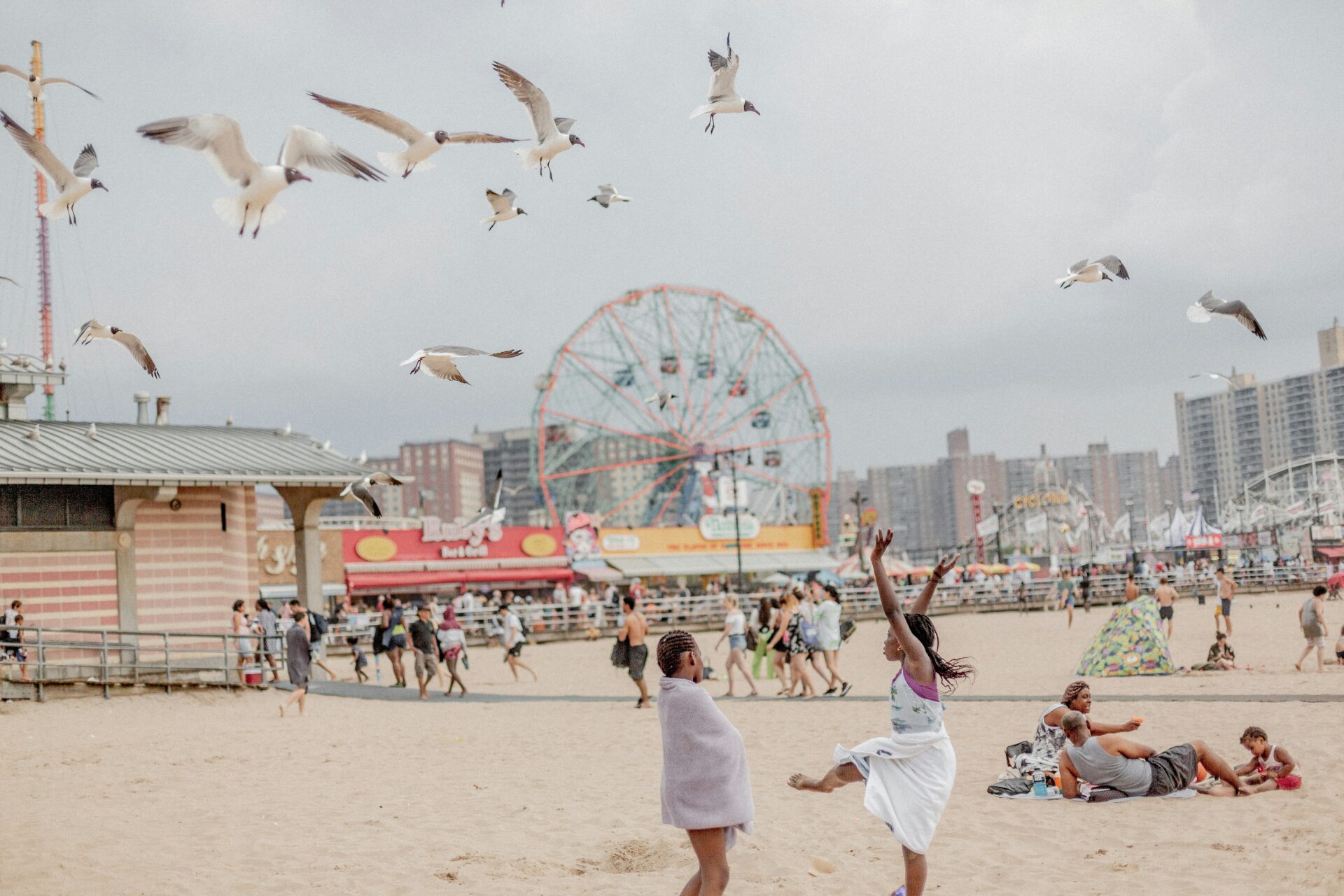
If you want to step off the skyscraper treadmill and find the city’s most nostalgic, most honest side, Coney Island is the answer. At the southern tip of Brooklyn, it’s an explosion of color and seaside air that works as a genuine break from Manhattan’s density.
Coney Island: things to do
The center of it all is Luna Park, with the historic Wonder Wheel from 1920 and the Cyclone roller coaster from 1927: built entirely of wood, designated a national historic landmark, hitting 60 mph across twelve drops that feel like they’re rearranging your spine. Also here is the New York Aquarium, the city’s only aquarium.
You can’t say you’ve been to Coney Island without a hot dog at Nathan’s: this is where the whole thing started, and where the famous hot dog eating contest runs every Fourth of July. The line looks long, but trust us: eating an original sitting on the beach is a rite of passage.
There’s something specific about walking the Riegelmann Boardwalk, the historic wooden promenade running along the ocean for miles. Salt air mixed with popcorn. It’s the best place in the five boroughs to watch the full range of New York humanity go by: street performers, fishermen on the pier, families taking the sun.
Coney Island: how to get there and when to go
Getting to Coney Island from Manhattan is simple: take one of four subway lines (D, F, N or Q) to Coney Island-Stillwell Avenue. The ride takes 40 to 50 minutes and crosses the Manhattan Bridge, which hands you a free view of the Brooklyn Bridge on the way. By bus, the B36 runs to Surf Avenue.
Summer is the season for the beach and the rides: don’t miss the Friday night fireworks, and in June the Mermaid Parade, the largest art parade in the United States. Off season Luna Park closes and what’s left is the melancholy of an empty boardwalk, which has its own appeal but isn’t what you’re after on a first trip.
Our tip
- Go on a Friday in summer: those are the fireworks nights over the ocean, and the only ticket you need is a subway swipe.
- On the Cyclone, sit in the back rows. You feel every inch of that 1927 wood, and the twelve drops land harder at the tail of the train.
- Budget 40 to 50 minutes of subway each way: this is a half day, not an hour squeezed between two Manhattan stops.
Eight more places to visit in New York
The twelve above are the ones nobody skips. But if you have a few extra days, or if you want a first trip that doesn’t look identical to everyone else’s, here are eight more icons worth your time. For each one, the essentials and what to expect.
13. Metropolitan Museum of Art
The Met is the most famous museum in the city and one of the largest on earth: over 5,000 years of art, from ancient Egypt to the European masters. It faces Central Park at 1000 Fifth Avenue, at 82nd Street. Admission is $30 for adults, free under 12, and the museum is closed on Wednesdays. One warning about the famous pay-what-you-wish policy: it applies only to New York State residents and to students from New York, New Jersey and Connecticut, with ID. Everyone else pays the full rate. Give it three hours minimum.
14. American Museum of Natural History
This is the Night at the Museum museum, and for kids it beats everything else on this list. The blue whale hanging in the ocean hall and the dinosaurs on the fourth floor justify the subway ride to the Upper West Side on their own. Our American Museum of Natural History tickets start at $39. As with MoMA, the pay-what-you-wish admission here applies only to New York State residents: visitors pay the full rate.
15. Guggenheim
Here the building is the artwork: Frank Lloyd Wright’s white spiral is meant to be walked from the top down. It’s the perfect museum when time is short, because an hour and a half to two hours covers everything without rushing, temporary exhibitions included. Our Guggenheim Museum tickets start at $35. A warning: many sites list the wrong days for pay-what-you-wish entry, which actually falls on Tuesday and Sunday in the late afternoon.
16. One World Observatory
The Freedom Tower’s observatory sits on the top floors of the tallest building in the Western Hemisphere, built where the Twin Towers stood. The ride up is part of the experience: the elevators project five hundred years of skyline evolution onto the walls in 47 seconds. Our One World Observatory tickets start at $53. It’s the natural pick if you’re already at the 9/11 Memorial, since they’re a two-minute walk apart.
17. The Edge
The suspended platform at Hudson Yards is the highest outdoor sky deck in the Western Hemisphere, with the highest glass floor in the world: you’re 1,131 feet up, on the 100th floor, looking straight down at the city through your own shoes. Our The Edge tickets start at $59. One detail the renderings never show, and that we confirmed on our last visit: it’s almost always windy up there, even on mild days at street level, because at that height the Hudson currents hit nothing on the way in. Bring a jacket, even in July.
The drop beneath your feet
The Edge Tickets
The highest outdoor sky deck in the Western Hemisphere, with a glass floor 1,131 feet up. Choose your time slot when booking.
There’s also Summit One Vanderbilt, the observatory-slash-art-installation next to Grand Central, with the mirrored rooms that took over social media. One note in the interest of transparency: Summit tickets are sold only on the attraction’s own site, so you won’t find them among our products.
18. Rockefeller Center
The Art Deco complex that houses Top of the Rock can be explored for free at street level: the Lower Plaza with the gilded Prometheus, the lobby murals, the NBC studios. In December it becomes the center of Christmas in New York, with the tree and the skating rink you’ve seen in every holiday film. The rest of the year it’s simply the most elegant way to cross Midtown on foot.
19. Grand Central Terminal
It isn’t just a station: it’s the most photographed station in America, and walking in is free. Look up at the Main Concourse ceiling and find the constellations painted backwards, a mistake nobody ever corrected. Then go down to the lower level, outside the Oyster Bar, and try the whispering gallery: stand in one corner of the arch, put someone in the opposite corner and speak quietly toward the wall. They’ll hear you as if you were next to them.
20. St. Patrick’s Cathedral
On Fifth Avenue, wedged between skyscrapers and directly across from Rockefeller Center, St. Patrick’s Cathedral is the largest neo-Gothic Catholic cathedral in the United States. Entry is free and twenty minutes is enough: the contrast between white marble spires and the glass towers around them is one of the images of Midtown that stays with you. Come early in the morning and you’ll have it almost to yourself.
New York attractions compared: prices, hours and visit times
The table below compares the twenty stops in this guide: opening hours, adult ticket price, recommended visit time and what makes each one worth it. Use it to slot attractions into your days without stacking two long museums into the same afternoon.
| Attraction | Price | Hours | Visit |
|---|---|---|---|
| Central Park | Free | 6am to 1am | 4-5 hrs |
| Statue of Liberty | from $35 | 8:30am to 3:30pm | Half day |
| Ellis Island | from $35 | 8:30am to 3:30pm | Half day |
| Empire State Building | from $55 | 9am to 12am | 1-2 hrs |
| Top of the Rock | from $59 | 9am to 10pm | 45-60 min |
| Brooklyn Bridge | Free | Always | 1 hr |
| High Line | Free | From 7am | 1 hr |
| 9/11 Memorial | Free | 8am to 8pm | 1 hr |
| 9/11 Museum | from $38 | 9am to 7pm | 2 hrs |
| Times Square | Free | Always | 1 hr |
| Broadway | from $89 | Evening | 2-3 hrs |
| MoMA | from $30 | 10:30am to 5:30pm | 2 hrs |
| SoHo | Free | Always | Half day |
| Coney Island | Free | Mar to Oct | Half day |
| Met Museum | $30 | Closed Wed | 3-4 hrs |
| Natural History | from $39 | Daily | 3 hrs |
| Guggenheim | from $35 | Daily | 1.5-2 hrs |
| One World | from $53 | Daily | 1 hr |
| The Edge | from $59 | Daily | 1 hr |
| Rockefeller Center | Free | Always | 30 min |
| Grand Central | Free | 5:15am to 2am | 30 min |
| St. Patrick’s | Free | Daily | 20 min |
Prices updated July 2026. Check the product page for current rates.
If you already know which attractions you want and just need to book without queueing at the desk, every deck, museum and show is in our New York museum tickets section, with your voucher within 24 hours.
If instead you’re weighing a city pass against individual tickets, all the formulas are compared in our New York passes section.
More attractions, less money
The New York Pass
One pass for over 100 attractions across the city. It pays off from the fourth visit onward, with support before and after you book.
Where the twenty stops are
On paper they all look close together, but Manhattan runs 13 miles end to end and Coney Island sits nearly an hour of subway from Midtown. The map below places the twenty stops from this guide, sorted by type, so you can see at a glance which ones share a neighborhood and group them into the same day instead of crossing the city twice.
ILMIOVIAGGIOANEWYORK.COM
The 20 best things to do in New York
Tap any point for hours, price and directions. Coney Island sits outside this frame, south of Brooklyn: zoom out to find it.
The simplest way to build your days is geographic. Midtown holds the Empire State, Top of the Rock, MoMA, Rockefeller Center, Grand Central, St. Patrick’s and Times Square, all walkable from each other. Downtown groups the 9/11 Memorial, One World and the ferry to the Statue of Liberty. The Upper East and West Side hold the three great museums around Central Park. For the full geography of the city, boroughs and neighborhoods included, there’s our map of New York.
What to know before you go to New York
Knowing what to see is half the job. The other half is arriving prepared, and these are the things worth settling before you fly.
- Getting around: the subway has 472 stations running 24 hours a day and is the fastest, cheapest way to move. Tap your contactless card or phone at the turnstile with OMNY, no ticket needed.
- Pass or single tickets: if you plan on more than three or four paid attractions, a city pass changes the final number. The best known formula is the New York CityPASS, from $149, which bundles a short list of the biggest attractions.
- Tipping: it isn’t optional here. Budget 18 to 20% in restaurants, and remember menu prices never include the 8.875% sales tax.
- Doing it cheaply: street food, flea markets, free concerts and the neighborhoods where locals actually eat are all covered in our guide to what to do in New York on a budget.
- Something to carry: if you’d rather have everything in your hand on the street, there are our New York attraction maps, from $25.
- Walking: twenty blocks north to south is roughly a mile. Most first-time visitors underestimate this by a factor of three, then buy new shoes on day two.
- When to come: late spring and fall have the best weather. December brings the Christmas atmosphere and the crowds that come with it. August is hot, humid and cheapest.
That leaves the hardest question: how many days do you need. It depends on how willing you are to slow down, because every subway hop costs you twenty to forty minutes. Three days covers the Manhattan icons and little else, with no museums. Five days adds Brooklyn, a couple of museums and a night at the theater. A week gets you to Coney Island and to the neighborhoods off the tourist circuit, with time to breathe.
If you’d rather have someone else handle the logistics, from airport transfers to restaurant reservations, that’s what our New York travel services are for.
Our advice for your first trip to New York
Faced with a list of twenty stops, the temptation is to tick every box. The advice we give our travelers is the opposite: pick ten and live them properly. New York isn’t a city you conquer, it’s one you start getting to know. Half an hour sitting on the red steps in Times Square watching people is worth more than three museums crossed at speed with one eye on the clock.
Be ready to walk far more than you think. Be ready to stop dead in the street because of the proportions of a building, and to find that every neighborhood feels like a different city. And be ready for the thing that happens to almost everyone: the day before you leave, you’re already working out when you’ll come back. We’ve been here for years showing this city to travelers, and if you want to see it with people who live it every day, all our New York guided tours are here.
Have a great trip, and remember there’s no perfect list: there’s only yours. When you want to know what we can do for it, start from Il Mio Viaggio a New York.
Frequently asked questions about things to do in New York
The ten stops nobody should skip are Central Park, the Statue of Liberty with Ellis Island, one observation deck (Top of the Rock, the Empire State Building or The Edge), the Brooklyn Bridge on foot, Times Square after dark, the High Line, the 9/11 Memorial, MoMA or the Metropolitan, a Broadway show and a walk through SoHo. Four full days fit all of them without rushing.
If you land in the morning, the right first stop is an observation deck: seeing the city from above before walking it at street level makes the geography of Manhattan click and orients you for the rest of the trip. Top of the Rock, from $59, is the best pick because it’s the only one where Central Park and the Empire State Building appear in the same view.
You need at least four full days for the Manhattan icons without rushing. Three days covers the main attractions but forces you to drop either the museums or Brooklyn. A week gets you to Coney Island, the outer neighborhoods and two or three museums. Factor in that jet lag takes half your first day and that subway hops run 20 to 40 minutes each.
Far more than you’d expect. Central Park, the Brooklyn Bridge, the High Line, Times Square, the 9/11 Memorial plaza, Rockefeller Center at street level, Grand Central Terminal, St. Patrick’s Cathedral and walking any neighborhood, SoHo included, are all free. So is the Staten Island Ferry, running 24 hours a day, which passes the Statue of Liberty and hands you the skyline from the water without costing a dollar.
It depends what you’re after, but for a first trip the area that hits hardest is Midtown between Fifth Avenue and Rockefeller Center, where the towers are densest and the verticality is overwhelming. If you want atmosphere instead of landmarks, the West Village and SoHo deliver more, with cobblestones and cast iron facades. And the best view of Manhattan comes from Brooklyn, looking back.
Observation decks run from $53 at One World Observatory to $59 at Top of the Rock and The Edge, with the Empire State Building at $55. Museums cost less: MoMA and the Metropolitan $30, the Guggenheim $35, the American Museum of Natural History $39. The Statue of Liberty ferry starts at $35 and the 9/11 Museum at $38. A Broadway show starts at $89. Past three or four paid attractions, a city pass is worth doing the math on.